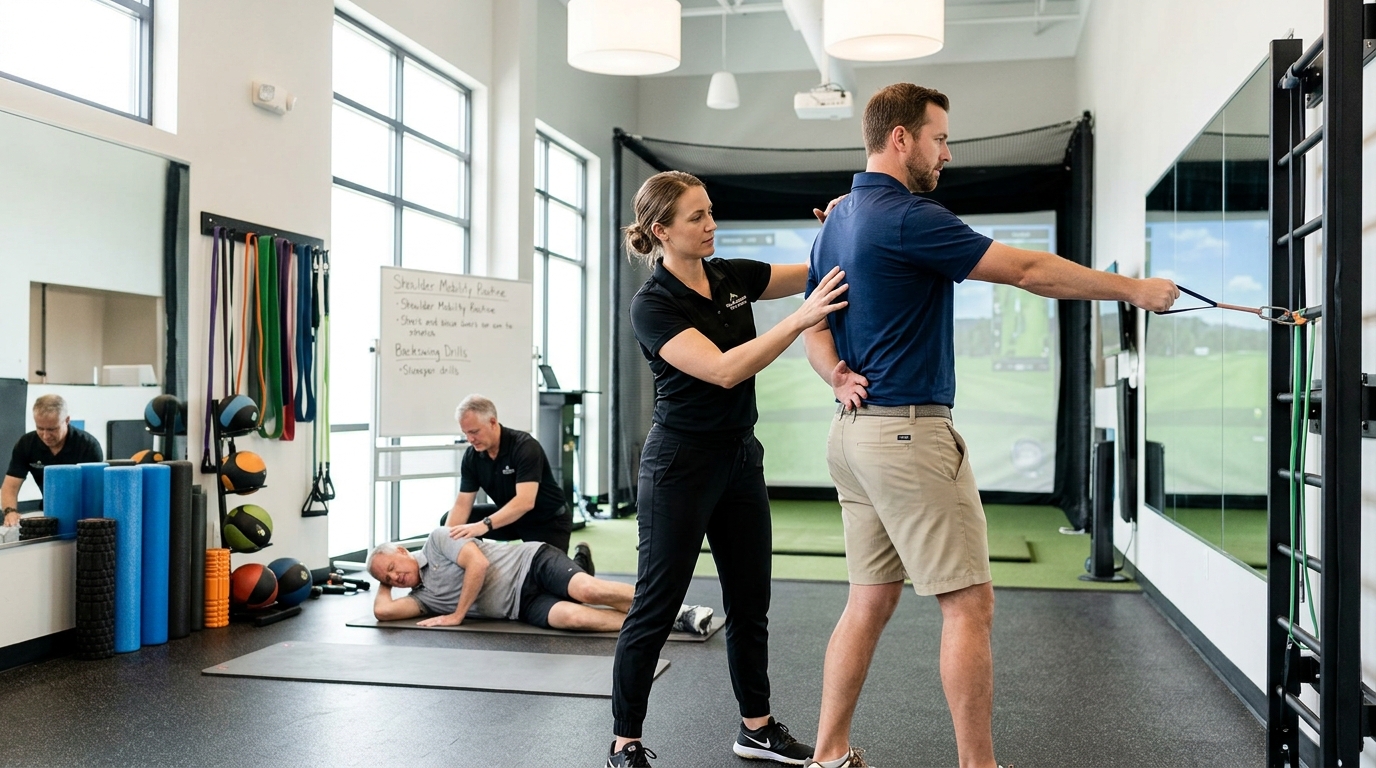
A powerful and consistent golf swing often begins with one simple factor: how well your shoulders move. Many players struggle with a limited backswing, yet they rarely consider flexibility as the root cause. This is where shoulder flexibility golf backswing improvement becomes essential, allowing your body to rotate fully and naturally without strain or compensation.
At first, golfers tend to focus on technique alone. However, even the best mechanics cannot overcome physical limitations. Tight shoulders restrict your ability to turn, which reduces both power and consistency. As a result, swings feel forced, and timing becomes difficult. By improving shoulder flexibility golf backswing performance, you create a foundation that supports a smoother, more efficient motion.
Over time, better mobility leads to noticeable changes. Your backswing becomes fuller, your transition smoother, and your overall swing more controlled. Instead of chasing distance, you begin to generate it naturally through better movement.
Why Shoulder Mobility Is Critical for a Full Backswing
The backswing sets the stage for everything that follows. If your shoulders cannot rotate properly, the rest of the swing becomes compromised. Shoulder flexibility golf backswing improvement allows you to create a wider and more complete turn, which is essential for storing energy.
When your shoulders move freely, your upper body can rotate around your spine without restriction. This creates a coiling effect that stores power during the backswing. Then, during the downswing, that stored energy is released, producing speed without effort.
Additionally, proper shoulder mobility improves balance. When your body turns efficiently, you remain centered throughout the swing. This stability leads to more consistent contact and better ball flight. Without it, compensations often lead to inconsistent results.
Common Shoulder Limitations That Affect Your Swing
Many golfers experience restricted shoulder movement without realizing it. One common issue is tightness in the chest and upper back. This limits how far the shoulders can rotate, resulting in a shorter backswing.
Another frequent problem is poor posture. Rounded shoulders and a forward head position reduce mobility and make rotation more difficult. Shoulder flexibility golf backswing exercises help address these issues by restoring proper alignment and movement.
Additionally, lack of strength in supporting muscles can affect mobility. When the muscles around the shoulders are weak, the body may resist full rotation. By improving both flexibility and stability, players can achieve a more effective backswing.
How Flexibility Improves Swing Efficiency
Flexibility is not just about range of motion; it directly impacts how your swing functions. Shoulder flexibility golf backswing training allows your body to move more freely, which improves both timing and coordination.
When your shoulders are flexible, they can rotate smoothly without tension. This reduces the need for compensations, such as lifting the arms or swaying the body. As a result, the swing becomes more efficient and repeatable.
Moreover, improved flexibility enhances rhythm. A relaxed body supports a consistent tempo, which is crucial for timing. When your movement feels natural, your swing becomes easier to control.
Effective Stretches to Improve Shoulder Flexibility
To improve mobility, it is important to focus on targeted stretches. Shoulder flexibility golf backswing routines should include movements that address both the shoulders and surrounding areas.
- Cross-body shoulder stretches help increase range of motion and reduce tightness in the upper body.
- Chest opening stretches improve posture and allow for better rotation during the backswing.
- Thoracic spine rotations enhance upper body mobility, supporting a fuller turn.
- Overhead arm stretches improve flexibility and help maintain proper swing plane.
By practicing these stretches consistently, players can gradually improve their mobility. Even short sessions can lead to noticeable changes over time.
When to Incorporate Stretching Into Your Routine
Timing plays an important role in flexibility training. Shoulder flexibility golf backswing exercises should be included both before and after playing. This ensures that your body is prepared for movement and can recover effectively.
Before a round, dynamic stretches help warm up the muscles. These movements increase blood flow and prepare your body for rotation. After playing, static stretches help maintain flexibility and reduce stiffness.
Additionally, stretching on non-golf days supports long-term improvement. By making it part of your daily routine, you create lasting changes that benefit your swing.
Connecting Shoulder Flexibility to Power and Distance
Many golfers associate power with strength, yet flexibility plays an equally important role. Shoulder flexibility golf backswing improvement allows for a larger turn, which increases the amount of energy stored during the swing.
As your shoulders rotate more freely, your backswing becomes deeper. This creates more potential energy that can be released during the downswing. As a result, you generate more speed without extra effort.
Furthermore, flexibility improves sequencing. When your body moves in the correct order, power is transferred efficiently. This leads to longer and more controlled shots.
Reducing Injury Risk With Better Mobility
Golf involves repetitive motion, which can place stress on the shoulders over time. Without proper flexibility, this stress can lead to discomfort or injury. Shoulder flexibility golf backswing routines help reduce this risk by improving movement quality.
Flexible muscles and joints handle stress more effectively. They allow for smoother motion and reduce strain on the body. This is especially important for golfers who play frequently.
Additionally, better mobility supports proper technique. When your body moves correctly, you are less likely to develop harmful habits. This protects both your performance and your health.
Building a Sustainable Flexibility Routine
Improving flexibility requires consistency and patience. Shoulder flexibility golf backswing training should be approached as a long-term commitment rather than a quick fix.
Start with simple stretches and gradually increase intensity. Focus on quality rather than quantity, ensuring that each movement is controlled and effective. This approach leads to steady progress.
Moreover, listen to your body. Avoid pushing too hard, as this can cause injury. Instead, aim for gradual improvement that supports both performance and comfort.
Translating Flexibility Gains Into Better Performance
The ultimate goal of improving flexibility is to enhance your performance on the course. Shoulder flexibility golf backswing improvement creates a more repeatable and efficient swing.
As your mobility increases, your backswing becomes more consistent. This leads to better timing and more reliable contact. Players often notice improved accuracy and distance as a result.
Additionally, confidence grows with better movement. When you trust your swing, you can focus on strategy and execution. This mental clarity further improves performance.
Conclusion: Unlocking Your Backswing Potential
A better golf swing starts with better movement. Shoulder flexibility golf backswing improvement provides the foundation for a smoother, more powerful, and more consistent swing.
By focusing on mobility, you allow your body to move naturally and efficiently. This not only improves performance but also makes the game more enjoyable. Over time, these changes lead to lasting improvement.
In the end, the key is consistency. With regular practice and a commitment to better movement, you can unlock your full potential and enjoy a more confident and effective golf swing.
FAQ
1. How long does it take to improve shoulder flexibility?
Some improvements can be felt quickly, but consistent practice over several weeks leads to lasting results.
2. Can better shoulder mobility increase swing distance?
Yes, improved rotation allows for a fuller backswing and more efficient power generation.
3. Should I stretch before or after playing golf?
Both are important, with dynamic stretches before playing and static stretches after.
4. What is the most common mistake in improving flexibility?
Many players rush the process instead of focusing on gradual and consistent improvement.
5. Do I need special equipment for shoulder stretches?
No, most effective stretches can be done using simple body movements without equipment.