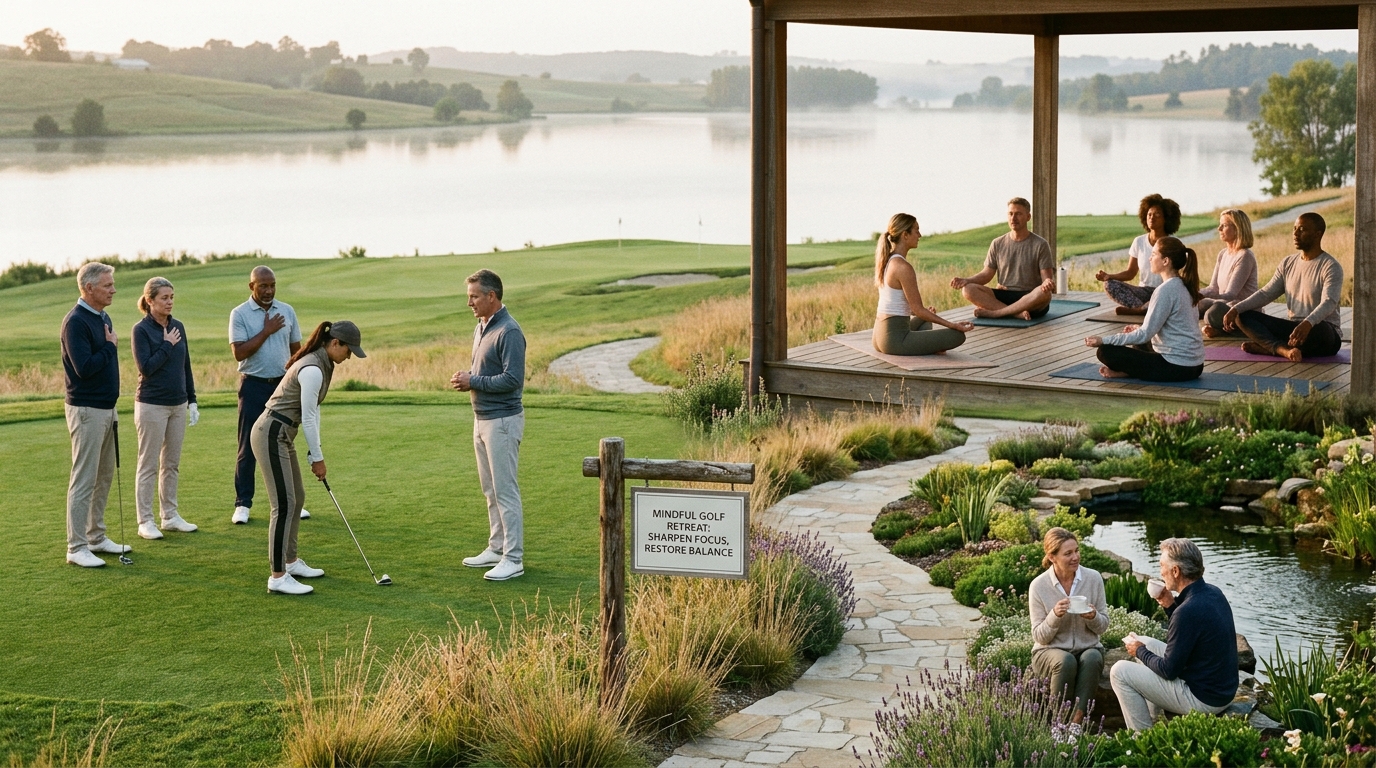
Modern life moves fast, and for many golfers, that pace follows them onto the course. Distractions, stress, and mental fatigue often limit performance more than technique ever could. This is why golf retreats focus balance have become increasingly popular, offering players a chance to step away, reset their mindset, and reconnect with both their game and themselves. Instead of simply playing rounds, these retreats create an environment where improvement feels natural and sustainable.
At first glance, a golf retreat might seem like just another vacation. However, it goes much deeper than that. These experiences are designed to combine skill development with mental clarity, allowing players to slow down and approach the game with intention. As a result, golf retreats focus balance by blending structured practice, relaxation, and mindful awareness in a way that transforms both performance and perspective.
Why Golf Retreats Create Mental Clarity
One of the biggest challenges in golf is maintaining focus over long periods. While players may start a round with good intentions, mental fatigue often sets in. However, stepping into a retreat environment changes everything. Golf retreats focus balance by removing everyday distractions and creating space for clear thinking.
When players leave behind work stress and daily responsibilities, their attention naturally shifts. They become more present, more aware, and more engaged with each shot. This clarity allows for better decision-making and improved consistency. Instead of reacting impulsively, golfers begin to approach the game with calm and control.
Moreover, structured schedules help reinforce this mindset. Practice sessions, guided routines, and quiet reflection all contribute to a focused approach. Over time, players develop habits that carry beyond the retreat and into their regular rounds.
The Role of Environment in Performance
The setting of a golf retreat plays a powerful role in shaping the experience. Surrounded by natural beauty, players find it easier to relax and stay present. Whether it is rolling fairways, ocean views, or mountain landscapes, these environments support mental reset and emotional balance.
Golf retreats focus balance by placing players in locations that naturally encourage calmness. The absence of noise and pressure allows the mind to settle. As a result, players can focus fully on their movements and decisions without distraction.
Additionally, walking the course in such settings becomes part of the experience. Each step feels intentional, and each moment offers a chance to reset. This rhythm creates a sense of flow that enhances both enjoyment and performance.
Combining Skill Development With Relaxation
Unlike traditional training programs, golf retreats integrate improvement with recovery. Instead of pushing players to exhaustion, they balance practice with rest. This approach ensures that both the body and mind remain fresh.
Golf retreats focus balance by structuring the day around both effort and relaxation. Morning sessions might focus on technique, while afternoons allow for reflection or light play. Evenings often include activities that promote recovery, such as stretching or quiet time.
This balance prevents burnout and encourages sustainable progress. Players absorb information more effectively when they are relaxed. As a result, improvements feel natural rather than forced.
How Mindfulness Enhances the Experience
Mindfulness plays a key role in many retreats. By encouraging players to stay present, it helps reduce overthinking and tension. Golf retreats focus balance by teaching golfers how to connect with each moment instead of worrying about outcomes.
During practice, players may focus on breathing, tempo, or awareness of movement. These small adjustments create a more controlled and consistent swing. Over time, this awareness becomes second nature.
Furthermore, mindfulness extends beyond the swing. Walking between shots, observing surroundings, and maintaining steady breathing all contribute to a calmer mindset. This approach transforms the entire round into a more focused and enjoyable experience.
Building Confidence Through Structured Learning
Confidence is often the missing piece in a golfer’s performance. Even with solid technique, doubt can disrupt execution. However, a retreat environment helps rebuild trust in one’s abilities.
Golf retreats focus balance by providing clear guidance and structured feedback. Coaches or programs often break down skills into manageable steps. This allows players to understand their game more deeply and make meaningful improvements.
As players see progress, their confidence grows. They begin to trust their swing and rely less on guesswork. This shift creates a more positive and consistent approach to the game.
The Social Element of Golf Retreats
While golf is often seen as an individual sport, the social aspect of retreats adds another dimension. Sharing the experience with like-minded players creates a supportive environment. Golf retreats focus balance not only on individual growth but also on connection.
Conversations, shared rounds, and group activities help players learn from each other. This exchange of ideas and experiences often leads to new insights. Additionally, the supportive atmosphere reduces pressure and encourages experimentation.
Over time, these connections can extend beyond the retreat. Players leave not only with improved skills but also with relationships that enhance their overall enjoyment of the game.
Restoring Physical and Mental Energy
Fatigue can quietly impact performance. Many golfers underestimate how much energy the game requires. Long rounds, combined with mental strain, can lead to inconsistent results.
Golf retreats focus balance by prioritizing recovery. Adequate rest, proper nutrition, and mindful pacing all contribute to improved energy levels. When players feel refreshed, their movements become more fluid and controlled.
Additionally, reduced stress supports better physical performance. Tension often limits flexibility and coordination. By creating a relaxed environment, retreats allow the body to move more naturally.
Translating Retreat Lessons Into Everyday Play
The true value of a retreat lies in what players take home. While the experience itself is powerful, its long-term impact depends on application. Golf retreats focus balance by teaching habits that can be maintained beyond the retreat.
Players often leave with routines that support focus and consistency. These might include pre-shot rituals, breathing techniques, or structured practice plans. By incorporating these habits into regular play, improvements become lasting.
Moreover, the mindset developed during the retreat continues to influence performance. Players approach challenges with greater calm and confidence. This shift leads to more consistent and enjoyable rounds.
Choosing the Right Retreat for Your Goals
Not all retreats are the same, and choosing the right one is important. Some focus more on technical improvement, while others emphasize relaxation and mindfulness. Understanding your goals helps you select the best fit.
Golf retreats focus balance by aligning with individual needs. If you want to improve your swing, look for programs with structured coaching. If you seek mental clarity, choose retreats that emphasize mindfulness and relaxation.
Additionally, consider the environment and schedule. A well-balanced program should include both practice and downtime. This ensures a holistic experience that supports both performance and well-being.
Long-Term Benefits Beyond the Game
The impact of a golf retreat extends far beyond the course. As players develop focus and balance, these qualities influence other areas of life. Golf retreats focus balance in a way that enhances overall well-being.
For example, improved focus can lead to better productivity at work. Similarly, reduced stress supports healthier relationships and decision-making. These benefits create a ripple effect that extends beyond golf.
Furthermore, the experience encourages a more mindful approach to daily life. Players learn to slow down, stay present, and appreciate each moment. This shift creates a more balanced and fulfilling lifestyle.
Conclusion: A Powerful Reset for Mind and Game
Golf is more than a sport; it is an opportunity to reconnect with both body and mind. Golf retreats focus balance by creating an environment where improvement feels natural and enjoyable. Through a combination of practice, relaxation, and mindfulness, players can achieve lasting growth.
As golfers step away from their usual routines, they gain clarity and perspective. They return not only as better players but also as more focused and balanced individuals. In the end, the true value of a retreat lies in its ability to transform both performance and mindset, making every round more meaningful and rewarding.
FAQ
1. What should I expect from a golf retreat experience?
You can expect a mix of practice sessions, relaxation, and activities designed to improve both your game and mental clarity.
2. Are these retreats suitable for beginners?
Yes, many programs cater to all skill levels and adjust their approach based on individual needs.
3. How long do most golf retreats last?
Most retreats range from a weekend to a full week, depending on the program and location.
4. Do I need coaching experience to benefit from a retreat?
No, retreats are designed to guide players at every level, even if you are new to structured learning.
5. Can the benefits of a retreat last long-term?
Yes, when you apply the habits and routines learned, the improvements can carry into your regular play.