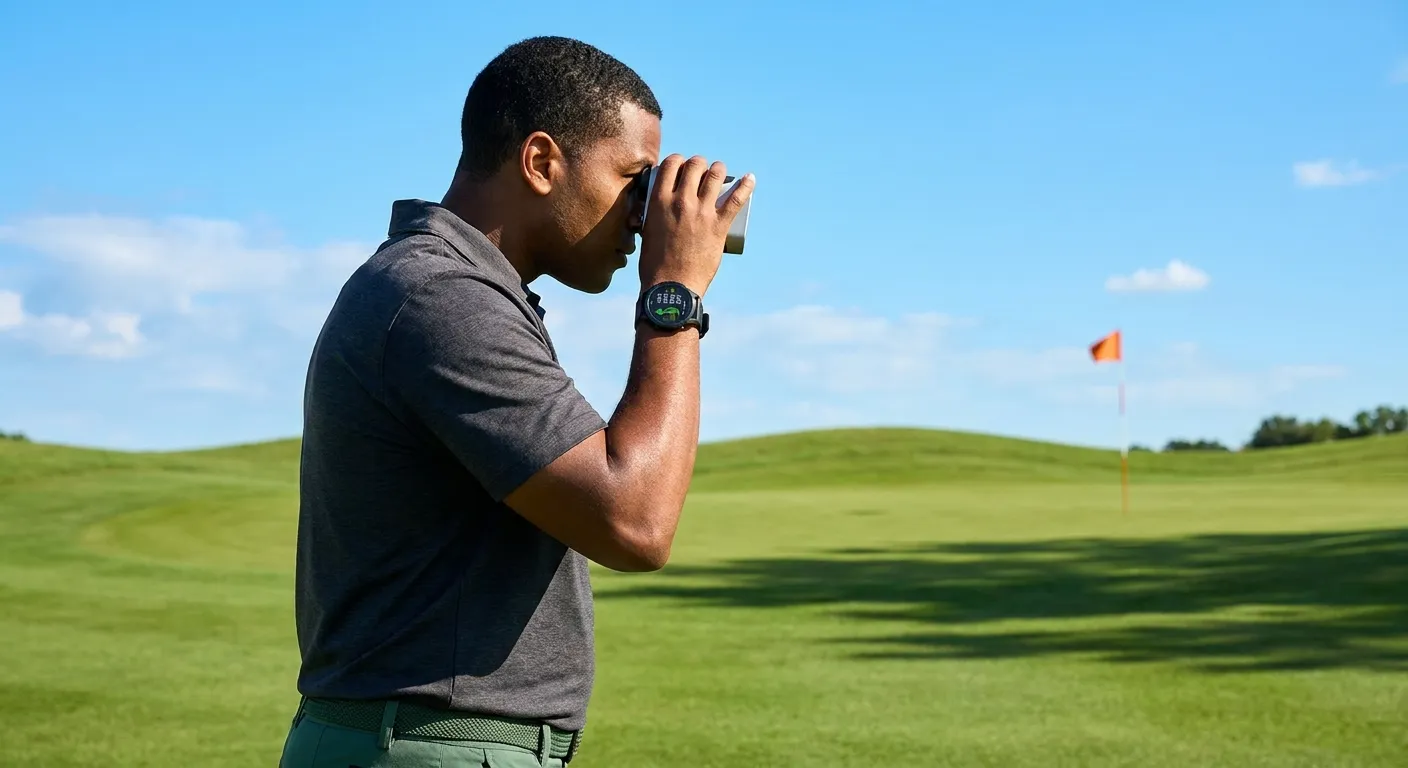
In the exciting landscape of modern golf, where participation continues to grow significantly—with 3.3 million on-course beginners in 2025 alone—new players are constantly seeking ways to improve and make the game less intimidating. One of the most impactful ways to enhance your course management and confidence is by utilizing a golf GPS or rangefinder. These devices are your virtual caddies, providing crucial distance information that can transform your strategic decisions.
Understanding yardage is not just for professionals; it is a fundamental aspect of smart golf for players of all levels. Whether aiming to clear a bunker, carry water, or simply hit the fat of the green, accurate yardage helps you select the right club and commit to your shot. This precision, powered by advancing technology, aligns with the broader trend of AI and data integration in golf, making decision-making more informed and less guesswork-driven. Ultimately, having reliable distance data gives you a significant advantage on the course.
Understanding Your Options: Golf GPS Devices
Golf GPS devices, often found in watches or handheld units, provide an overhead map view of the hole. They give you distances to the front, middle, and back of the green, as well as to various hazards and lay-up spots. Some advanced models even offer touch-screen capabilities to get distances to any point on the course. These tools are particularly helpful for new golfers who are still learning course layouts. Furthermore, many models offer additional features that enhance the overall golfing experience.
Pros of Golf GPS Units
- Quick and easy to use, especially for walking golfers.
- Many watches track scores and stats, offering valuable post-round analysis.
- Provides a broader view of the hole and potential hazards, aiding course strategy.
- Great for beginners who might struggle with aiming a laser device.
- Offers a comprehensive overview, making it easier to plan shots.
Cons of Golf GPS Units
- Can be less precise than a laser rangefinder, especially to exact pin positions.
- Requires regular updates for course maps, which can sometimes be overlooked.
- Battery life can be a concern for longer rounds or multi-day use.
- Signal issues can occasionally affect accuracy in certain areas.
Popular choices include Garmin Approach series watches and handheld units, and Bushnell Neo Ghost GPS. For more specific product recommendations, consider exploring our GPS Units guide.
Understanding Your Options: Laser Rangefinders
Laser rangefinders work by emitting a laser pulse that reflects off your target, calculating the distance based on the time it takes for the pulse to return. This provides highly accurate distances to the flagstick, bunkers, trees, or any object you can aim at. Consequently, this tool offers unparalleled precision for specific targets. Many golfers find the direct feedback from a laser rangefinder particularly reassuring.
Pros of Laser Rangefinders
- Extremely accurate, down to a single yard, ensuring precise club selection.
- Can measure distances to any object, not just pre-mapped points.
- Many models offer ‘slope’ compensation (though illegal in some tournaments), adjusting for elevation changes.
- No need for course map updates, as it measures real-time distances.
- Provides instant feedback, which is beneficial for quick decision-making.
Cons of Laser Rangefinders
- Requires a steady hand to aim, which can be challenging for some players.
- Can be slower to use than a GPS watch, especially when trying to get multiple distances quickly.
- Doesn’t offer a full overhead view of the hole, which some golfers prefer for strategic planning.
- Visibility can be an issue in foggy or rainy conditions.
Leading brands include Bushnell, Callaway, and Blue Tees Golf. If you’re interested in learning more about these devices, our Golf Range Finder resource provides further details.
Choosing Your Tech Caddie: Golf GPS or Rangefinder?
The best choice for you depends on your playing style and priorities. If you value speed, convenience, and a comprehensive overview of the course, a GPS device might be ideal. This is especially true for those who prefer quick glances at their wrist or a handheld unit without the need to aim. On the other hand, if pinpoint accuracy to the flagstick and specific targets is your priority, a laser rangefinder will serve you better. Many seasoned golfers appreciate the exactness a laser provides, feeling it gives them a truer sense of distance. Ultimately, both devices aim to improve your game, but they do so in different ways.
Consider your typical playing environment. Do you often play on unfamiliar courses where an overhead view would be greatly beneficial? Or do you mostly play on your home course, where precise distances to known hazards are more critical? Think about your comfort level with technology too. A GPS watch is often more intuitive for many users, whereas a rangefinder requires a bit more active participation. Moreover, your budget will also play a role in your decision, as prices can vary significantly between models and brands.
Factors to Consider When Deciding
When making your decision between a golf tracker and swing analyzer and a distance measuring device, several factors come into play. Your skill level, frequency of play, and budget are all important considerations. Furthermore, the specific features offered by different models can greatly influence your experience. Therefore, a careful evaluation of these aspects is essential.
Skill Level and Game Style
Beginners often find GPS devices more forgiving and easier to use. They provide general distances without the pressure of aiming precisely. More experienced players, however, might prefer the exactness of a rangefinder, especially when trying to shave strokes off their game. Moreover, if you frequently play in competitive settings, understanding tournament rules regarding slope features is crucial. Some golfers enjoy the detailed statistics that many GPS watches offer, which can help in identifying areas for improvement.
Frequency of Play and Course Familiarity
If you play frequently on many different courses, a GPS device with pre-loaded maps can be incredibly useful. It provides instant course layout information. Conversely, if you primarily play on your home course, a laser rangefinder might be sufficient, as you likely already know the general layout. However, even on familiar courses, precise distances to pin positions can change daily, making a laser invaluable. Think about how often you truly need an overhead map versus exact yardage to a specific point.
Budget Considerations
The price range for both types of devices varies widely. Basic GPS watches can be quite affordable, while high-end laser rangefinders with advanced features can be a significant investment. It’s important to set a budget and then explore the options within that range. Sometimes, a combination of a basic GPS watch for overall course management and a handheld rangefinder for critical shots can be a good compromise, although this increases the overall cost. Ultimately, the best device is one that fits your needs and your wallet.
Advanced Features and What They Offer
Modern golf distance measuring devices come packed with features beyond just basic yardage. Understanding these can help you choose the best tool for your game. For example, some devices offer integration with smartphone apps, providing even more data.
Slope Compensation
Many rangefinders include a slope feature, which adjusts the distance based on elevation changes. This provides an