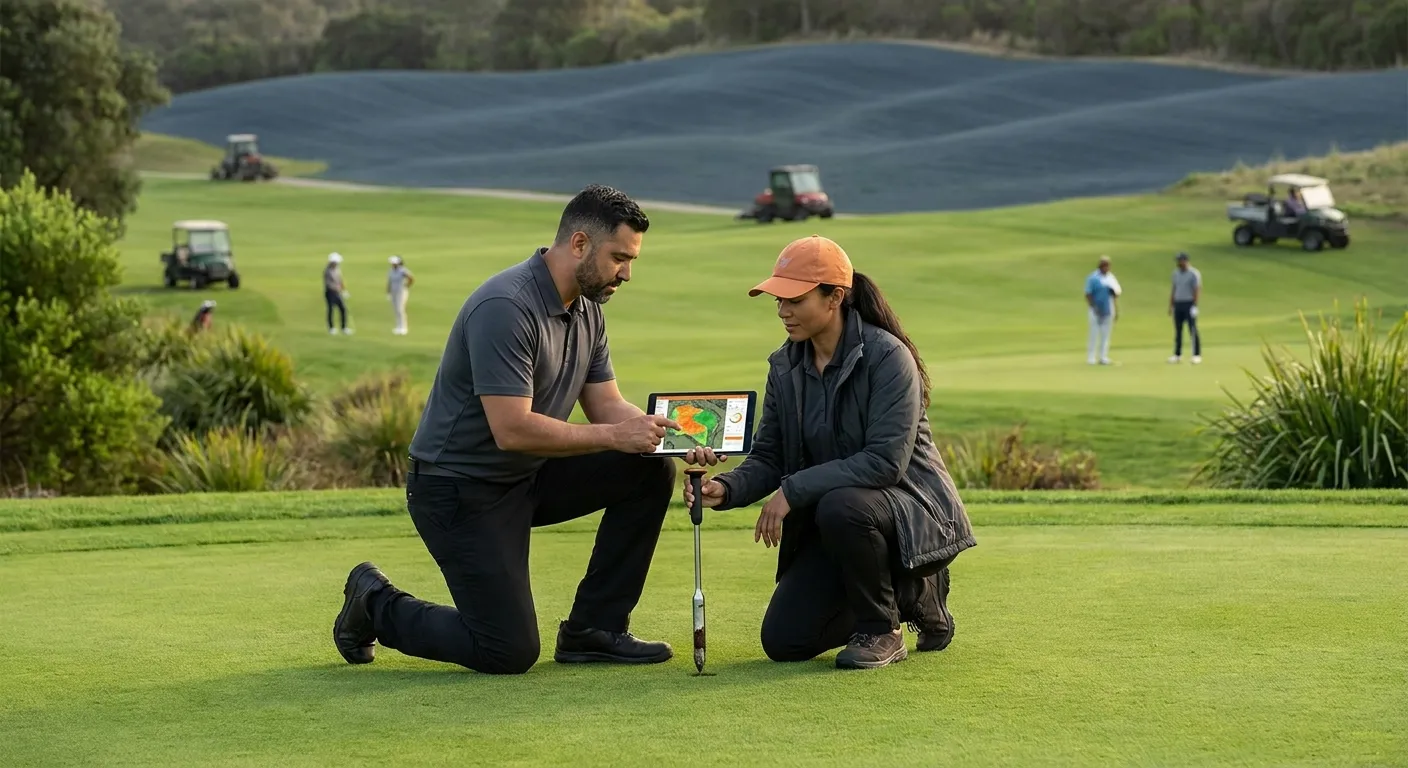
Even for beginner to intermediate golfers, understanding golf course management strategies can dramatically improve your scores and confidence. It’s not just about hitting the ball well; it’s about thinking smarter. With golf participation reaching record levels, exceeding 29 million U.S. on-course players in 2025, a growing number of golfers are looking for ways to improve, and smart strategy is often overlooked. Therefore, adopting a strategic approach becomes essential for every golfer.
Why Golf Course Management Strategies Matter
Many golfers focus solely on swing mechanics. However, poor decisions can cost you more strokes than a slightly off swing. Course management is essentially your game plan for each hole. This plan takes into account your strengths, weaknesses, and the course conditions. It helps you minimize risks and maximize opportunities, making the game feel less intimidating and more enjoyable. Consequently, mastering this aspect of golf can truly transform your play.
Know Your Game (and Your Limits)
Before you even step on the tee, have an honest assessment of your abilities. What’s your average drive? How far do you typically hit your irons? What’s your reliable shot shape? Trying to hit a shot you’re not consistent with is a recipe for disaster. For example, if your driver isn’t accurate today, an iron off the tee might be the smarter play to stay in position. Understanding your personal golf statistics can significantly aid in this assessment. You could even use a golf tracker and swing analyzer to gather precise data on your performance.
The Tee Box: Your First Strategic Decision
Your choice off the tee sets up the entire hole. Don’t just grab the driver every time. Look at the hole layout. Is there trouble left or right? Are there bunkers or water hazards at your typical landing zone? Sometimes, a shorter, straighter shot with a hybrid or long iron is the best way to get to a comfortable yardage for your next shot. Think about where you want to be, not just how far you can hit it. This thoughtful approach is a core element of effective course strategy.
Approaching the Green: Play to the Fat of the Green
When hitting into the green, resist the urge to always aim for the flag, especially if it’s tucked close to a hazard. The “fat of the green” is the safest, widest part. Aiming here gives you a larger margin for error. A two-putt from the center of the green is almost always better than a risky shot that ends up in a bunker or water, leading to a much higher score. Consider the pin position relative to your approach shot. If the pin is front left and there’s a bunker there, aim for the middle of the green and accept a longer putt. This careful consideration is a key component of excellent golf course management strategies.
Reading the Course: Understanding Conditions
Pay attention to the wind, the firmness of the greens, and the lie of your ball. A strong headwind might mean taking an extra club, while a tailwind could mean one less. Firm greens will make the ball roll out more, so you might need to land it shorter. Understanding these conditions and adjusting your strategy accordingly is a hallmark of a smart golfer. Furthermore, using a reliable golf range finder can provide crucial distance information, helping you make more informed decisions based on the conditions.
The Mental Game: Stay Present and Positive
Course management isn’t just about physical strategy; it’s also about your mindset. Don’t dwell on bad shots. Every shot is a new opportunity. Focus on the present moment and the next shot. If you hit a poor shot, acknowledge it, learn from it, and then let it go. Maintaining a positive attitude, even after a tough hole, is vital for consistent performance. Remember, golf is as much a mental game as it is a physical one. Consequently, developing mental resilience will significantly enhance your overall golf strategy.
Developing Your Personalized Golf Course Management Strategies
Improving your game requires a systematic approach to strategy. It means learning from every round and continuously refining your approach. Here’s how you can develop and implement your own effective golf course management strategies.
Pre-Round Preparation: The Foundation of Success
Before you even step onto the first tee, preparation is key. Research the course if you haven’t played it before. Look at aerial views, understand potential hazards, and note par-3, par-4, and par-5 layouts. Consider the weather forecast; wind direction and temperature can significantly impact your club selection and ball flight. Furthermore, arriving early allows for a proper warm-up, both physically and mentally. This preparation sets the stage for solid execution of your golf course management strategies.
Shot Selection: Risk vs. Reward
Every shot presents a risk-reward scenario. A hero shot over water to a tucked pin might look appealing. However, the probability of success for most amateur golfers is low. Instead, consider the safer option that leaves you with a manageable next shot. For instance, laying up short of a hazard on a par 5 might seem less aggressive. Yet, it often leads to a better chance at par or even birdie than attempting a risky second shot. This thoughtful consideration of risk versus reward is central to smart play.
Navigating Hazards: Bunkers, Water, and Out of Bounds
Hazards are part of golf, and how you deal with them defines your course management. If a bunker is guarding the green, aim for the side away from it. If water is in play, consider a club that takes the hazard out of play entirely, even if it means a longer approach. Out of bounds areas demand extreme caution; a provisional ball might be a wise decision if there’s any doubt. Understanding how to play around these challenges is a critical aspect of effective golf course management strategies. Many golfers find that a good pair of golf shoes can provide the stability needed for tricky lies near hazards.
Putting Strategy: Beyond Just Hitting the Ball
Putting is often where strokes are gained or lost. Your putting strategy should focus on speed control and reading breaks. Don’t just aim for the hole; consider a target within a certain radius that ensures a two-putt. Reading the green involves understanding the slope, grain, and even moisture. Practice your lag putts to minimize three-putts. A consistent putting routine, moreover, can significantly improve your confidence on the greens. This meticulous approach to putting is a vital element of overall strategic play.
Advanced Course Management Principles for Lower Scores
Once you’ve mastered the basics, you can delve into more advanced principles that further refine your golf course management strategies. These techniques are what truly separate good golfers from great ones.
Playing the Percentages: Understanding Probabilities
Professional golfers constantly play the percentages. They understand their own capabilities and the likelihood of successfully executing a particular shot. For example, if you hit your 7-iron 150 yards 80% of the time, and your 6-iron 160 yards 60% of the time, and you have 155 yards to the pin, a smart player might choose the 7-iron and accept being a little short, rather than risking a poorly struck 6-iron. This data-driven thinking is a cornerstone of advanced course strategy. Leveraging tools like a golf launch monitor can provide invaluable data to help you understand your shot percentages better.
Strategic Layups: Setting Up Your Next Shot
A layup is not a sign of weakness; it’s a sign of intelligence. Sometimes, the best play is not to go for the green in two on a par 5, but rather to hit a shot that leaves you a full, comfortable wedge shot into the green. This eliminates awkward half-shots or shots from difficult lies. A strategic layup ensures you are always playing from a position of strength, making your next shot easier and more predictable. Therefore, incorporating strategic layups into your golf course management strategies is highly beneficial.
Course Mapping and Yardage Books
Many serious golfers use yardage books or GPS units to get precise distances and understand the nuances of each hole. These tools provide information on hazards, green contours, and optimal landing zones. Knowing the exact distance to a bunker or the front edge of a green allows for more accurate club selection. While not strictly necessary for beginners, as you progress, utilizing a GPS unit can significantly enhance your strategic planning. This detailed understanding of the course is a significant advantage.
Adapting to Changing Conditions
Golf courses are dynamic environments. Wind shifts, greens dry out or get softer, and pin positions change daily. A truly skilled golfer constantly observes and adapts their golf course management strategies throughout the round. What worked on the front nine might not be the best approach on the back nine. Staying flexible and making real-time adjustments is crucial for success. This adaptability is a hallmark of a seasoned player.
Learning from Every Round: Post-Round Analysis
After your round, take some time to reflect. What decisions worked well? What decisions led to trouble? Did you stick to your game plan? Analyzing your round, perhaps even keeping notes, helps reinforce good habits and identify areas for improvement in your course management approach. This reflective practice is invaluable for long-term growth as a golfer. For further insights, consider exploring golf books that delve into strategy and mental aspects of the game.
Conclusion: Master Your Game with Smart Golf Course Management
Mastering golf course management strategies is about more than just hitting the ball. It’s about thinking strategically, understanding your game, and making smart decisions on every shot. By focusing on pre-round preparation, intelligent shot selection, effective hazard navigation, and a strong mental approach, you can significantly lower your scores and enjoy the game even more. Remember, golf is a journey of continuous learning and improvement. Embrace the strategic side of the game, and you’ll find yourself playing better and with greater confidence. Ultimately, adopting these principles will elevate your golf experience.
FAQ
What is golf course strategy?
Golf course strategy refers to the tactical decisions a golfer makes before and during a round to minimize risks, maximize opportunities, and achieve the best possible score. It involves planning each shot considering one’s abilities, the course layout, and prevailing conditions.
How can I improve my decision-making on the golf course?
To improve your decision-making, start by honestly assessing your strengths and weaknesses. Focus on playing to the widest part of the green, avoiding hazards, and choosing clubs that give you the highest probability of success. Practice visualizing your shots and their potential outcomes before you swing.
Why is understanding my personal yardages important for course strategy?
Knowing your personal yardages for each club is fundamental. It allows you to select the correct club for any given distance, helping you avoid over-hitting or under-hitting, and ensuring you land your ball in optimal positions, away from trouble.
Should I always aim for the flag?
No, you should not always aim for the flag. A key aspect of smart course play is to aim for the