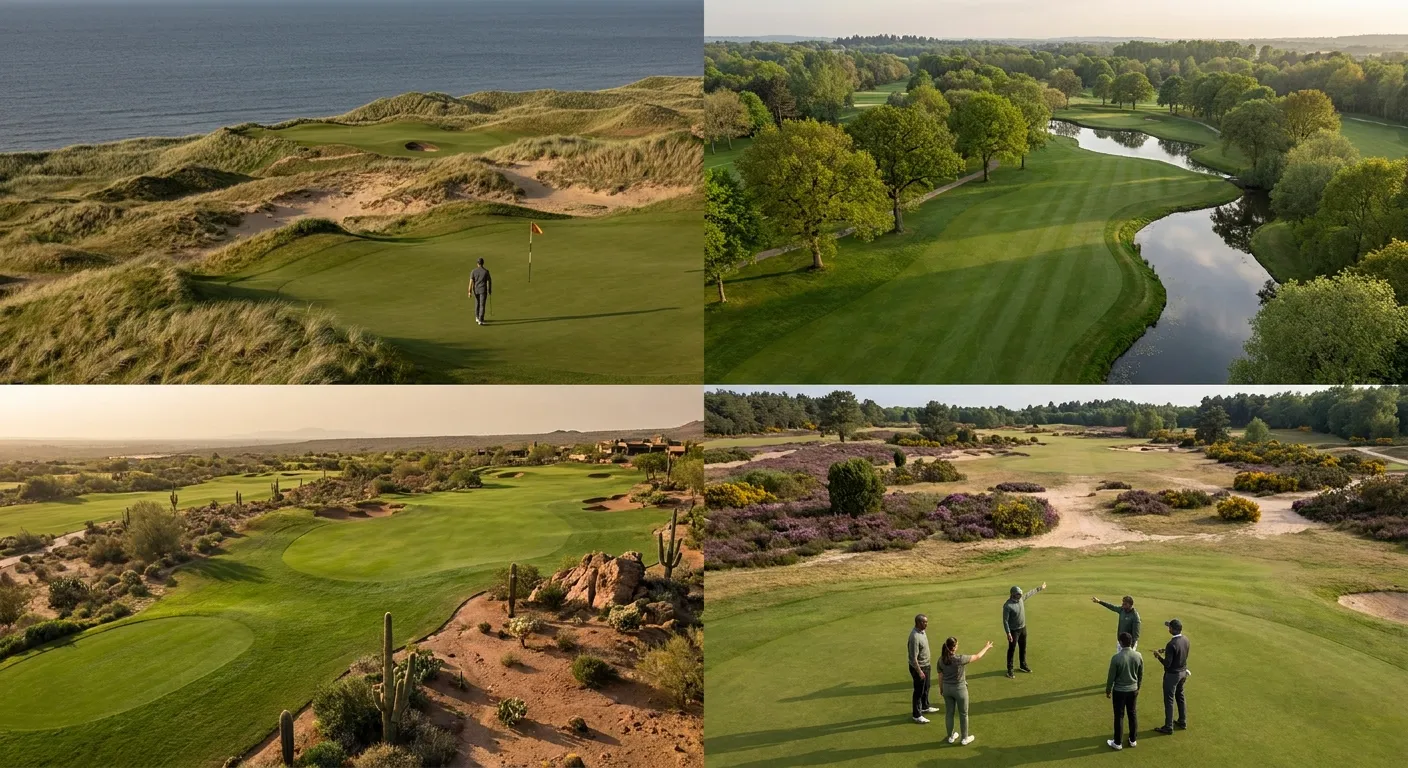
Golf isn’t just one game; it’s a collection of experiences shaped by the course you play. Understanding the different types of golf courses is key to choosing the right challenge for your skill level and preferences. From the windswept links of Scotland to the lush parklands of America, each course offers a unique set of challenges and aesthetics.
At Golf Luxor, we believe that knowing what to expect can make your round more enjoyable and help you improve faster. Let’s explore the distinct characteristics of various course types and how they might influence your game.
Exploring Different Types of Golf Courses
Golf courses are broadly categorized by their natural environment, design philosophy, and the challenges they present. Here are the most common types you’ll encounter:
Links Courses: The Game’s Ancient Roots
Originating in Scotland, links courses are often considered the purest form of golf. They are typically found along coastlines, characterized by undulating terrain, natural hazards like gorse and pot bunkers, and firm, fast-playing conditions. Trees are usually sparse or non-existent, making wind a dominant factor. The ground game is paramount here, as golfers often need to use the contours of the land to their advantage. Consequently, mastering bump-and-run shots becomes essential.
- Key Characteristics: Coastal location, natural dunes, minimal trees, firm turf, strong winds, pot bunkers.
- Best For: Golfers who enjoy strategic play, adapting to natural elements, and a traditional golf experience.
- What to Expect: Challenging lies, unpredictable bounces, and a need for creative shot-making.
Parkland Courses: Lush Green Havens
Parkland courses are the most common type of golf course, especially inland. They are characterized by meticulously manicured fairways, lush rough, and an abundance of trees that define the holes and penalize errant shots. Water hazards are also common. These courses often feature softer ground conditions, making aerial approaches more effective. They demand accuracy off the tee and precise iron play. Therefore, a consistent pre-shot routine can be incredibly beneficial here.
- Key Characteristics: Inland location, tree-lined fairways, well-maintained greens, water hazards, softer turf.
- Best For: Golfers who prefer a classic, aesthetic golf experience and value accuracy over raw power.
- What to Expect: Strategic shot placement, penalty for straying off the fairway, and often more forgiving greens.
Desert Courses: Striking Landscapes
Predominantly found in arid regions like the American Southwest, desert courses integrate the natural desert landscape into their design. Fairways are often bordered by native desert flora and rock formations, which act as severe hazards. These courses can be visually stunning, offering a unique contrast of green fairways against a rugged backdrop. They typically feature firm, fast conditions and demand accuracy, as stray balls are often unplayable. Furthermore, choosing the right golf balls is crucial for optimal performance on these challenging layouts.
- Key Characteristics: Arid environment, native desert hazards, rock formations, often elevation changes, firm turf.
- Best For: Golfers who appreciate unique aesthetics and a premium on straight hitting.
- What to Expect: Unforgiving hazards, fast greens, and a need for excellent course management.
Coastal Courses: Beauty and Challenge by the Sea
While links courses are a specific type of coastal course, many other coastal layouts exist that don’t fit the traditional links definition. These courses often feature stunning ocean views, sea breezes, and dramatic elevation changes. They might incorporate elements of both links and parkland designs, with some trees but also open, exposed holes. Water hazards, often natural inlets or oceanfront cliffs, play a significant role. Consequently, adapting to changing wind conditions is a key skill. Many golfers find these courses incredibly picturesque yet equally challenging.
- Key Characteristics: Ocean views, sea breezes, varied terrain, potential for both trees and open holes, natural water hazards.
- Best For: Golfers who enjoy breathtaking scenery and a dynamic playing environment.
- What to Expect: Variable wind, beautiful backdrops, and strategic shot selection influenced by the coastline.
Heathland Courses: Inland Gems with Links Qualities
Heathland courses, primarily found in England, share some similarities with links courses but are located inland on sandy, heathland terrain. They are characterized by gorse, heather, and broom, providing natural hazards and a rugged feel. Trees are present but not typically dense, allowing for strategic options. The ground is often firm and fast, encouraging a creative short game. These course types offer a wonderful blend of natural beauty and strategic design, providing a different flavor of golf experience.
- Key Characteristics: Inland, sandy soil, gorse and heather, strategic bunkering, firm conditions.
- Best For: Golfers who appreciate classic design, strategic challenges, and a natural, unmanicured feel.
- What to Expect: Penalizing rough, firm fairways, and a need for precision.
Executive Courses: Quicker Rounds for All
Executive courses are designed for shorter rounds, typically featuring a mix of par-3s and a few par-4s, with very few or no par-5s. They are excellent for beginners, juniors, or anyone looking to get in a quick game. These courses focus on the short game and iron play, making them ideal for practice or a casual outing. They are often less intimidating than full-length courses, encouraging more people to enjoy the game. Moreover, they are perfect for practicing your simple chipping tips for beginners.
- Key Characteristics: Shorter overall length, mostly par-3s and par-4s, quicker rounds.
- Best For: Beginners, juniors, seniors, or golfers seeking a faster game and short-game practice.
- What to Expect: Focus on irons and wedges, less walking, and a more relaxed atmosphere.
Resort Courses: Play Where You Stay
Resort courses are typically part of a larger resort complex, designed to offer an enjoyable experience for a wide range of golfers, from casual players to avid enthusiasts. They often feature generous fairways, picturesque landscaping, and excellent amenities. While they can still be challenging, their primary goal is often playability and aesthetics, ensuring guests have a memorable time. In fact, many resort courses are designed by famous architects, adding to their appeal.
- Key Characteristics: Part of a resort, often visually stunning, varied difficulty, excellent amenities.
- Best For: Vacationing golfers, those seeking a luxurious experience, and players of all skill levels.
- What to Expect: Beautiful scenery, well-maintained facilities, and a focus on enjoyment.
Championship Courses: The Ultimate Test
Championship courses are designed to host professional tournaments and challenge the world’s best golfers. They are characterized by extreme length, challenging bunkering, demanding green complexes, and often severe rough. Playing a championship course can be an intimidating but rewarding experience, offering a glimpse into what the pros face. For example, understanding golf course management strategies is vital on these layouts.
- Key Characteristics: Long, difficult, severe hazards, challenging green complexes, often meticulously maintained.
- Best For: Highly skilled golfers looking for the ultimate challenge.
- What to Expect: A true test of every aspect of your game, from power to precision.
Understanding Course Design Philosophies
Beyond the natural environment, the philosophy behind a course’s design significantly impacts the playing experience. For instance, some architects prioritize strategic choices, while others focus on penalizing errant shots. Robert Trent Jones Sr., for example, was known for his