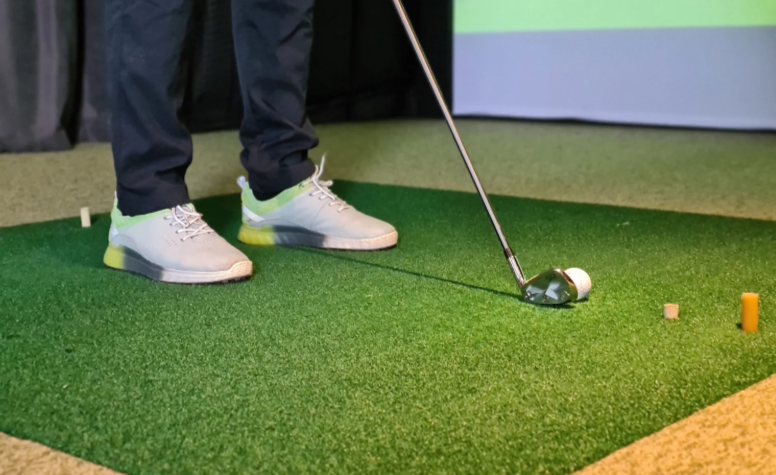
Custom-fitted golf clubs can transform your performance faster than most swing changes. While many golfers invest in lessons or new equipment, they often overlook how crucial proper club fitting truly is. When your clubs match your body, swing speed, and tempo, the game feels easier and more consistent.
Off-the-rack clubs are built to fit the average golfer. However, very few players actually fall into “average” measurements. Height, arm length, posture, and swing dynamics vary significantly. Therefore, using equipment that does not match your mechanics can limit distance and accuracy.
If you have ever wondered whether custom-fitted golf clubs justify the investment, this guide will explain the performance benefits, long-term value, and practical considerations.
What Are Custom-Fitted Golf Clubs?
Custom-fitted golf clubs are built or adjusted specifically to match your physical profile and swing characteristics. During a fitting session, professionals measure factors such as:
- Swing speed
- Launch angle
- Spin rate
- Club path
- Attack angle
- Shaft load and release
In addition, fitters assess height, wrist-to-floor measurement, grip size needs, and posture. Based on this data, they recommend specific shaft flex, shaft weight, club length, lie angle, and grip size.
Unlike generic retail sets, custom-fitted golf clubs align precisely with how you move the club. As a result, performance becomes more efficient and repeatable.
Improved Distance Through Better Energy Transfer
Distance does not always require swinging harder. In fact, proper equipment often unlocks extra yards without additional effort.
When shafts match your swing speed and tempo, energy transfers more effectively at impact. If the shaft is too stiff, you may lose carry distance because the clubface fails to square naturally. Conversely, if it is too flexible, timing can suffer.
Custom-fitted golf clubs ensure the shaft loads and releases in sync with your motion. Consequently, ball speed increases and launch conditions optimize. Even small adjustments in loft or lie angle can produce measurable gains.
Many golfers gain 5 to 15 yards simply from proper fitting. Over time, that improvement translates into shorter approach shots and more scoring opportunities.
Tighter Shot Dispersion and Better Accuracy
Accuracy often improves more dramatically than distance.
When lie angles are incorrect, shots consistently drift left or right. If club length does not match your posture, center-face contact becomes inconsistent. These small mismatches create wide dispersion patterns.
Custom-fitted golf clubs reduce these errors. By aligning the clubhead properly at impact, they promote straighter ball flight and tighter shot grouping.
Additionally, properly sized grips enhance control. A grip that is too small can cause excessive hand action. A grip that is too large may restrict release. Fitting corrects these details.
Over a round of golf, improved dispersion leads to more fairways hit and more greens in regulation. That consistency often lowers scores more effectively than chasing distance alone.
Enhanced Comfort and Reduced Strain
Comfort matters more than many golfers realize.
Clubs that are too long or too short force awkward posture adjustments. Over time, poor setup positions strain the lower back, shoulders, and wrists.
Custom-fitted golf clubs promote natural posture. When your stance feels balanced, you swing more freely. Furthermore, reduced strain supports joint health and long-term playability.
For senior golfers or players managing injuries, this benefit becomes especially important. Proper shaft weight and flex reduce vibration and shock at impact. Consequently, fatigue decreases during longer rounds.
Comfort translates directly into confidence. When the club feels right in your hands, you focus on execution rather than compensation.
Faster Improvement for Developing Players
Some golfers believe fitting is only for advanced players. However, beginners and mid-handicappers often benefit significantly.
Custom-fitted golf clubs accelerate learning. When equipment supports correct mechanics, bad habits decrease. For example, proper lie angles prevent compensatory swings that develop from repeated directional misses.
Instead of fighting your clubs, you build fundamentals with appropriate tools. This alignment allows lessons and practice sessions to produce clearer results.
Additionally, developing players gain confidence more quickly. Seeing straighter, more consistent ball flight reinforces positive swing changes.
Investing in fitting early may prevent years of frustration caused by poorly matched equipment.
Long-Term Value and Cost Efficiency
While fitting requires an upfront investment, it often saves money long term.
Many golfers purchase multiple sets trying to solve performance issues. However, without data-driven adjustments, improvements remain inconsistent.
Custom-fitted golf clubs reduce unnecessary equipment turnover. When clubs match your game, you are less likely to replace them prematurely.
Furthermore, improved performance may reduce lesson frequency needed to fix equipment-related flaws. Instead of compensating for mismatched clubs, you focus on skill development.
Considering the typical lifespan of quality irons or drivers, the cost per year of a proper fitting becomes relatively small compared to its impact.
Data-Driven Decisions Remove Guesswork
Modern fitting technology eliminates speculation.
Launch monitors measure ball speed, spin rate, carry distance, and dispersion in real time. High-speed cameras analyze swing path and impact conditions.
During testing, you compare different shaft options, loft adjustments, and head designs. Because the data shows measurable differences, decisions become objective rather than emotional.
Custom-fitted golf clubs result from this evidence-based process. Instead of relying on brand marketing or recommendations from friends, you choose equipment tailored to your unique swing.
This clarity builds trust in your setup. When doubt disappears, performance often improves naturally.
Who Benefits Most from Custom Fitting?
Almost every golfer can benefit. However, certain groups see especially strong results.
Mid-handicap players seeking consistency often experience dramatic dispersion improvements. Seniors adjusting to reduced swing speed gain distance through optimized shaft selection. Competitive players fine-tune trajectory and spin control for specific course conditions.
Even low-handicap golfers benefit from small refinements. In competitive settings, marginal gains make meaningful differences.
Custom-fitted golf clubs adapt to your current ability while allowing room for growth. If your swing changes significantly, minor adjustments can maintain alignment.
Common Misconceptions About Custom Fitting
Several myths discourage golfers from exploring fitting.
First, some believe they are “not good enough” for professional fitting. In reality, higher-handicap players often gain the most noticeable benefits.
Second, many assume fitting only applies to drivers. However, irons, wedges, and putters also require proper length and lie angles.
Third, some fear the process will push expensive upgrades. Reputable fitters prioritize performance over price. In many cases, small adjustments to existing clubs can provide significant improvement.
Understanding these misconceptions helps golfers approach custom-fitted golf clubs with realistic expectations.
When Should You Get Fitted?
Timing matters.
If you are purchasing new clubs, fitting beforehand ensures correct specifications from the start. If you experience persistent directional misses, inconsistent distance gaps, or discomfort during play, fitting may reveal the cause.
Additionally, significant swing changes justify reevaluation. Increased strength, reduced flexibility, or recovery from injury can alter ideal specifications.
Regular assessment every few years keeps custom-fitted golf clubs aligned with evolving performance.
The Psychological Edge
Beyond technical benefits, fitting offers mental advantages.
Confidence increases when you trust your equipment. Instead of questioning whether the club suits you, you focus fully on execution.
This clarity reduces second-guessing and tension. As a result, tempo improves and decision-making sharpens.
Golf demands mental resilience. Removing equipment doubt strengthens that foundation.
Conclusion: A Smart Investment in Your Game
Custom-fitted golf clubs are not luxury upgrades. They are performance tools designed to match your unique swing and body mechanics.
By improving distance, tightening dispersion, enhancing comfort, and accelerating development, fitting provides measurable value. While the initial investment may seem significant, the long-term benefits outweigh the cost.
Golf rewards precision and consistency. Properly fitted clubs eliminate unnecessary barriers and allow your natural ability to shine.
If you are serious about improving, consider professional fitting. When your equipment works with you rather than against you, progress becomes smoother and more sustainable.
FAQ
- How long does a professional club fitting take?
Most sessions last between 60 and 120 minutes, depending on the number of clubs tested. - Can existing clubs be adjusted instead of replaced?
Yes. Lie angles, lofts, and grips can often be modified to improve performance. - Is fitting necessary for beginners?
Beginners benefit from clubs that match their size and swing speed, which can support faster development. - How often should I update my fitted specifications?
Every few years or after significant swing changes is typically sufficient. - Does custom fitting guarantee lower scores?
While no solution guarantees results, properly matched equipment improves consistency and supports scoring improvement.