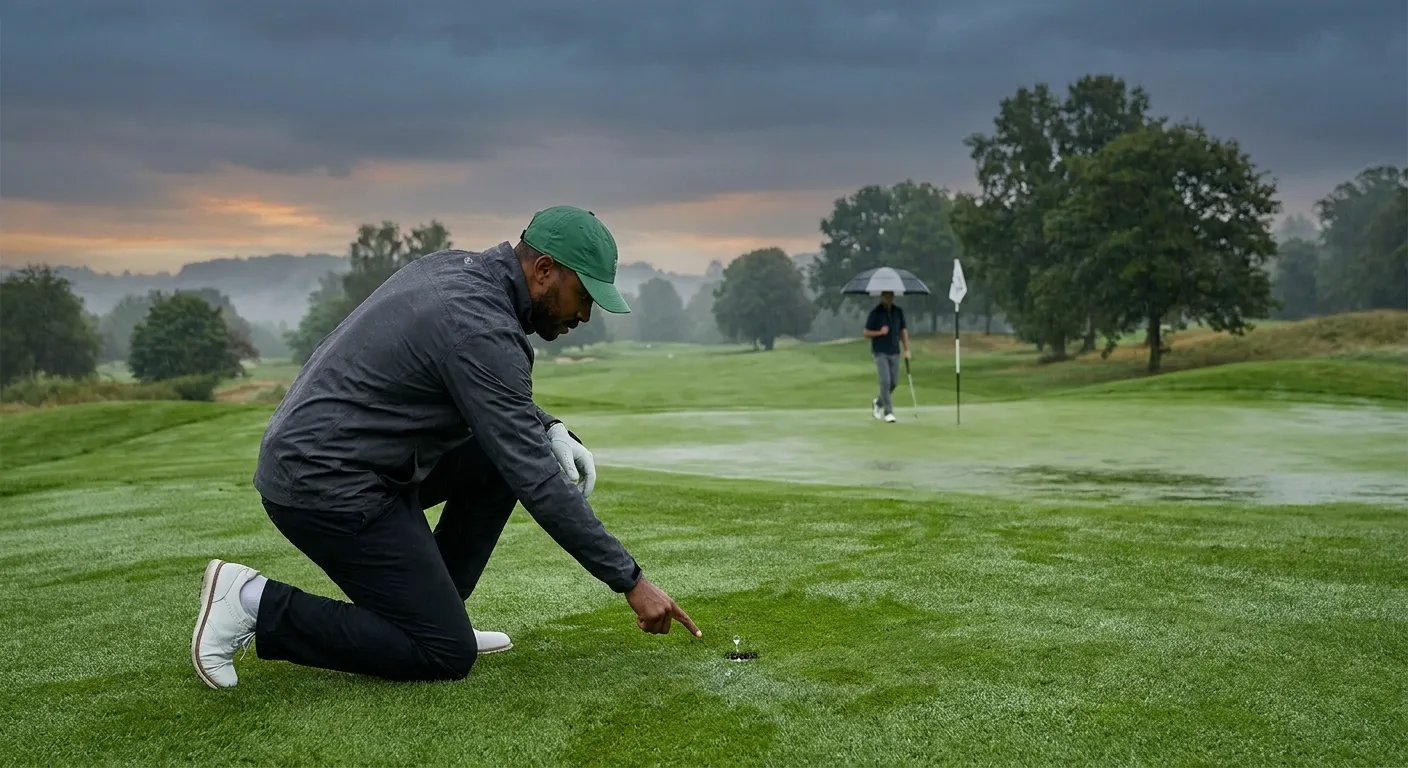
Golf is an outdoor sport, which means Mother Nature often plays a significant role in your round. For beginner and intermediate golfers, understanding how different golf course conditions impact your game isn’t just about preparing for the weather – it’s about strategic decision-making that can save you strokes and boost your confidence. At Golf Luxor, we aim to make the game feel less intimidating, and that includes helping you adapt to whatever the course throws at you.
Let’s break down how various conditions can affect your play and what adjustments you can make to stay ahead.
Wind: The Invisible Opponent on the Golf Course
Wind is arguably the most impactful weather condition on the golf course. It can turn a straightforward shot into a real challenge, thereby demanding careful consideration. Consequently, adapting your strategy becomes essential for success.
How Wind Affects Your Shots
- Into the Wind: The ball will fly shorter and higher. You’ll need to take more club (e.g., hit a 7-iron when you’d normally hit an 8-iron) and try to keep the ball lower. A slight fade (left-to-right for a right-hander) can also be exaggerated.
- With the Wind: The ball will fly longer and often lower. You might need less club. Be wary of overshooting greens, however. A slight draw (right-to-left for a right-hander) can be exaggerated.
- Crosswind: The ball will drift significantly in the direction of the wind. Aim into the wind to compensate. For example, if the wind is blowing from left to right, aim left of your target. Strong crosswinds demand precise clubface control.
Adjustments for Wind
- Club Selection: Always take more club into the wind, less with the wind. For crosswinds, consider a club that allows you to swing smoother and keep the ball flight lower.
- Ball Position & Swing: Play the ball slightly further back in your stance for shots into the wind to encourage a lower flight. Focus on a controlled, smooth swing rather than trying to overpower the ball.
- Putting: Wind can even affect putts, especially on exposed greens. Allow for slight drift on longer putts.
Rain and Wet Conditions: Managing Moisture
Playing in the rain isn’t ideal, but it’s often unavoidable. Wet golf course conditions change how the ball reacts and how you need to approach your shots. Therefore, preparation is key.
How Rain Affects Your Shots
- Reduced Distance: Wet clubs and balls can reduce spin, leading to less distance, especially with irons and wedges. The ball will also roll less after landing.
- Slippery Grip: A wet grip can lead to loss of control, consequently impacting accuracy.
- Soft Ground: The ground will be softer, meaning less bounce and potentially more embedded lies.
- Heavy Rough: Rough becomes much thicker and harder to get through.
Adjustments for Rain
- Club Selection: Take at least one extra club, sometimes two, especially for approach shots. The ball won’t carry as far or roll as much.
- Grip: Use a rain golf glove or keep a towel handy to dry your grip before every shot. Consider thicker grips if you frequently play in wet conditions.
- Swing: Opt for a smoother, more controlled swing. Avoid trying to hit the ball too hard, as this can lead to mishits.
- Putting: On wet greens, putts will be slower. Hit them firmer than usual, but be mindful of standing water that can stop a ball dead.
- Footwear: Invest in waterproof golf shoes to maintain traction and comfort.
Temperature Extremes: Hot, Cold, and Everything In Between
Temperature significantly influences how the ball travels and how the course plays. Understanding these nuances can give you a distinct advantage, regardless of the temperature. Consequently, adjusting your strategy is crucial.
Playing in Cold Weather
When temperatures drop, several factors come into play. Firstly, the air density increases, which means the ball will travel shorter distances. Additionally, cold muscles are less flexible, potentially affecting your swing speed.
- Reduced Distance: Cold air is denser, reducing ball flight. The ball itself also becomes harder and less compressible, further impacting distance. Expect shots to fly 5-10% shorter.
- Stiff Muscles: Your body will be less flexible. Warm up thoroughly and consider wearing layers that allow for free movement.
- Harder Greens: Greens can become firmer, causing shots to bounce more.
Adjustments for Cold Weather
- Club Up: Always take one or two extra clubs to compensate for the distance loss.
- Warm-up: Spend extra time stretching and warming up your muscles.
- Dress Appropriately: Layer up with thermal wear and waterproof outerwear. Consider hand warmers.
- Swing Smoothly: Don’t try to overpower the ball. A smooth, rhythmic swing is more effective.
Playing in Hot Weather
Conversely, hot weather can also present challenges, albeit different ones. High temperatures can lead to dehydration and fatigue, impacting your focus and physical performance. Moreover, the course itself might play differently.
- Increased Distance: Warmer, less dense air allows the ball to fly slightly further.
- Fatigue & Dehydration: Heat can quickly drain your energy and focus.
- Softer Greens (if irrigated): Greens might be softer due to irrigation to combat heat, leading to more receptive landing areas.
- Firmer Fairways (if dry): Dry fairways can lead to extra roll, but also more unpredictable bounces.
Adjustments for Hot Weather
- Stay Hydrated: Drink plenty of water or electrolyte drinks throughout your round.
- Protect Yourself: Wear a hat, sunglasses, and use sunscreen to prevent sunburn and heatstroke.
- Manage Energy: Consider using a golf push cart instead of carrying your bag to conserve energy.
- Adjust for Roll: Account for more roll on dry fairways.
Course Firmness and Green Speed: Understanding the Surface
Beyond the immediate weather, the inherent firmness of the course and the speed of the greens are critical golf course conditions that influence every shot. These factors are often a result of recent weather, maintenance practices, and the course’s natural drainage.
How Course Firmness Affects Play
- Firm Fairways: The ball will roll considerably more after landing. This can be beneficial for distance but also means shots can run out into trouble more easily. Approach shots might bounce higher and further.
- Soft Fairways: Less roll after landing. The ball might plug or create a divot, reducing distance.
- Firm Greens: Shots will bounce and roll more. It becomes harder to hold the green, requiring more precise spin and trajectory control.
- Soft Greens: Shots will stop more quickly, often creating pitch marks. These greens are generally more receptive.
Adjustments for Course Firmness
- Fairway Shots: On firm fairways, aim for landing spots that account for extra roll. On soft fairways, you might need to take an extra club for carry distance.
- Approach Shots: For firm greens, consider playing a lower trajectory shot or using a club that generates more spin to help the ball stop. For soft greens, you can be more aggressive, knowing the ball will likely hold.
Understanding Green Speed
Green speed, often measured using a Stimpmeter, refers to how fast a golf ball rolls on the putting surface. It’s a critical aspect of putting and varies greatly depending on the course, time of year, and recent weather.
- Fast Greens: The ball rolls easily with minimal effort. Subtle breaks become more pronounced.
- Slow Greens: More force is required to get the ball to the hole. Breaks might appear less significant.
Adjustments for Green Speed
- Practice Putts: Always take practice putts on the practice green to get a feel for the speed.
- Pace Control: On fast greens, focus on a smooth, decelerating stroke. On slow greens, ensure you make a firm, accelerating stroke through the ball.
- Read Breaks: Breaks will be more exaggerated on fast greens and less so on slow greens.
Elevation and Humidity: Subtle but Significant Factors
While wind, rain, and temperature are obvious, other subtle golf course conditions like elevation and humidity also play a role in how your ball flies and how the course plays. These less-discussed factors can still impact your game.
Elevation Changes
Playing golf at higher elevations can significantly impact ball flight due to thinner air.
- Thinner Air: At higher altitudes, the air is less dense. This means there’s less resistance on the ball, allowing it to travel further.
- Distance Adjustment: For every 1,000 feet of elevation gain, expect your shots to travel approximately 1-2% further. So, at 5,000 feet, your 150-yard club might go 157-165 yards.
Adjustments for Elevation
- Club Down: Use one less club than you normally would for a given distance, especially on longer shots.
- Practice: If possible, hit a few practice shots to gauge the distance changes on the range.
Humidity’s Impact
High humidity, often accompanying hot weather, can also affect ball flight, though its impact is generally less pronounced than wind or temperature.
- Denser Air (slightly): Humid air is actually less dense than dry air at the same temperature, as water vapor molecules are lighter than nitrogen and oxygen molecules. This means the ball might travel slightly further, similar to hot weather, but the effect is minimal.
- Sweat & Grip: The more significant impact of humidity is on your comfort and grip. Sweat can make your hands slippery.
Adjustments for Humidity
- Grip Management: Use a good golf glove and keep a towel handy to dry your hands and grips.
- Hydration: Stay well-hydrated, as humidity can make you sweat more without realizing the extent of fluid loss.
Adapting to Every Scenario: Your Strategic Toolkit
Successfully navigating diverse golf course conditions requires more than just knowing the adjustments; it demands a flexible mindset and a strategic approach. Consider these overarching principles to truly master the art of playing in any weather.
Pre-Round Preparation
Before you even step onto the first tee, gather information. Check the local weather forecast, not just for temperature and precipitation, but also for wind speed and direction. Many courses also provide daily updates on green speed and general course conditions. This foresight allows you to pack appropriately and mentally prepare your game plan.
Course Management and Shot Selection
Your course management strategy should evolve with the conditions. On a windy day, prioritize keeping the ball low and in play over trying to hit heroic shots. In wet conditions, aim for the center of the greens to avoid potential flyer lies from the rough. Sometimes, playing safe and taking a bogey is a better decision than risking a double-bogey or worse. Using a golf range finder can help you accurately assess distances, especially when conditions alter ball flight.
Mental Game Resilience
Perhaps the most crucial adjustment is mental. Frustration can easily mount when conditions are challenging. Embrace the challenge. Remind yourself that everyone is playing in the same conditions. Focus on one shot at a time and maintain a positive attitude. A resilient mindset helps you make better decisions and enjoy the round, even when it’s tough. For more insights on improving your game, explore our resources on golf clubs and how they impact performance.
Learning from Each Round
Every round played in challenging conditions is a learning opportunity. Pay attention to what worked and what didn’t. Did you take enough club into the wind? Did your rain gear hold up? Reflecting on these experiences will build your repertoire of strategies for future rounds. Over time, you’ll develop an intuitive understanding of how to tackle various challenges, making you a more adaptable and confident golfer. You might even consider a golf tracker and swing analyzer to review your performance data in different weather scenarios.
Understanding and adapting to varied playing conditions is a hallmark of an experienced golfer. By internalizing these strategies, you’ll not only save strokes but also gain a deeper appreciation for the nuanced beauty of the game. So, next time Mother Nature decides to join your round, you’ll be ready to play your best, no matter what the golf course conditions.
For more detailed information on golf course maintenance and its impact on play, you can refer to resources from the Golf Course Superintendents Association of America (GCSAA) or articles from reputable golf publications like Golf Digest.
FAQ: Mastering the Elements on the Course
How do different weather conditions affect ball flight?
Weather conditions significantly alter ball flight. Wind is the most impactful, causing the ball to fly shorter into it, longer with it, and drift in crosswinds. Cold air makes the ball fly shorter due to increased density, while warmer air allows it to fly slightly further. Rain reduces spin and distance, leading to less roll.
What adjustments should I make for playing in the wind?
When playing in the wind, always take more club into the wind and less with it. For crosswinds, aim into the wind to compensate for drift. Focus on a smooth, controlled swing to keep the ball flight lower, especially when hitting against the wind. Also, consider playing the ball slightly back in your stance.
How does playing in the rain change my strategy?
In rainy conditions, expect reduced distance and less roll. Take an extra club or two for approach shots. Use a rain glove and towel to maintain a dry grip. Opt for a smoother swing to avoid mishits. Remember that putts will be slower on wet greens, so hit them firmer.
What impact does temperature have on my golf game?
Temperature affects ball distance and your physical comfort. In cold weather, the ball flies shorter, and your muscles are stiffer, requiring more club and a thorough warm-up. In hot weather, the ball flies slightly further, but you risk fatigue and dehydration, making hydration and energy management crucial.
Are there any subtle factors besides wind, rain, and temperature?
Yes, elevation and humidity are subtle but important factors. Higher elevation means thinner air, causing the ball to fly further, so you might need to club down. Humidity has a minimal effect on ball flight but can lead to sweat and slippery grips, emphasizing the need for proper grip management and hydration.