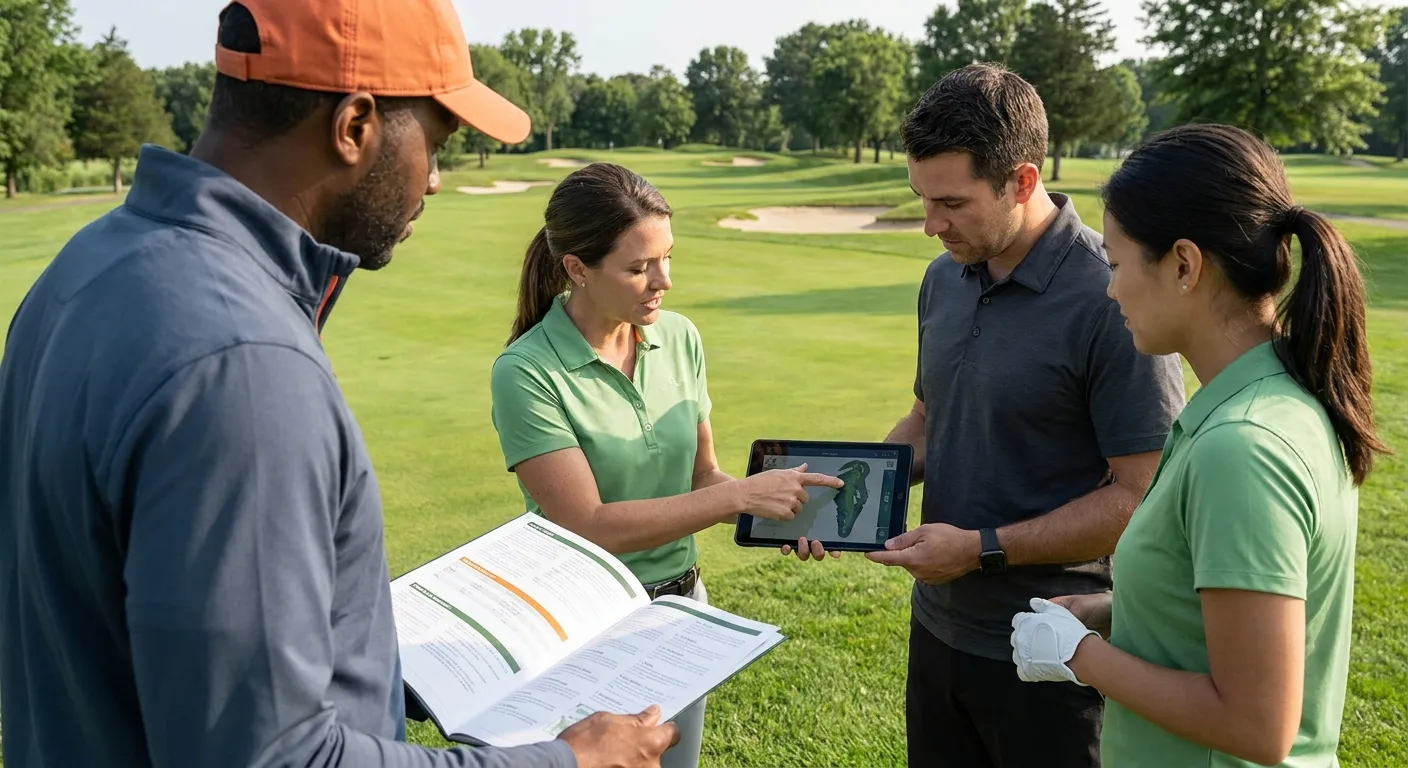
Stepping onto a new golf course can feel like navigating a maze if you’re not familiar with its unwritten rules and strategic nuances. For many beginner and intermediate golfers, the initial excitement of playing can quickly turn into apprehension, contributing to the kind of “retention gap” the industry is seeing with new players. But understanding golf course etiquette and strategy for beginners is key to turning those hesitant rounds into confident, enjoyable experiences. At Golf Luxor, we believe the game should feel less intimidating, and a big part of that comes from knowing how to play smart and respectfully.
This guide will walk you through the essential etiquette rules that keep the game flowing smoothly and introduce you to basic course strategy that will shave strokes off your score, all while helping you feel more comfortable and confident on any course. Consequently, you’ll find the game more rewarding.
The Unspoken Rules: Essential Golf Etiquette
Golf’s traditions are a big part of its charm, and respecting them ensures a pleasant experience for everyone. Think of these as common courtesies that make the game enjoyable for all 48.1 million golfers out there. Key etiquette points include:
- Pace of Play: Keep up with the group in front of you. If you’re falling behind, let faster groups play through. This is crucial for maintaining the flow of play, especially with increased participation, as noted by the National Golf Foundation.
- Course Care: Always repair your divots and ball marks on the greens. Rake bunkers after use. This preserves the course quality for everyone. Similarly, replace divots on the fairways.
- Safety First: Be aware of other players. Never hit a shot until you’re sure no one is in range. Furthermore, always shout “Fore!” loudly if your ball is heading towards another player.
- Quiet Please: Minimize noise and distractions when others are preparing to hit. Silence your phone or keep it on vibrate. In addition, avoid talking during another player’s backswing.
- Cart Rules: Follow all cart path rules to protect the turf. Keep carts a safe distance from greens and tees. Specifically, observe any signs indicating where carts are allowed or restricted.
Adhering to these simple rules not only shows respect for your fellow golfers and the course but also enhances your own enjoyment by fostering a positive playing environment. It’s about being part of the golfing community responsibly. Moreover, good etiquette demonstrates your understanding of the game’s traditions.
Reading the Course: Basic Strategy for Every Hole
Beyond etiquette, a little strategy goes a long way. Instead of just hitting the ball as hard as you can, take a moment to assess each hole. This strategic thinking helps reduce frustration and improve your score, making the game a more rewarding lifestyle and wellness activity.
Tee Box Decisions
Before you even swing your driver, look at the hole. Is it a tight par 4 with hazards on both sides? Maybe a 3-wood or even an iron is a smarter play for accuracy over distance. Remember the industry trend for beginners: “Start With the Right Gear (and Don’t Overdo It)” and focus on finding comfortable golf club suited to your swing speed. Don’t feel pressured to always pull out the driver if a more conservative shot keeps you in play. Often, choosing a club that ensures you hit the fairway is more beneficial than trying to gain extra yards at the risk of an errant shot. Consequently, your overall score will likely improve.
Navigating the Fairway and Rough
Once your ball is off the tee, the next shot requires careful consideration. From the fairway, aim for the widest part of the green or a safe landing area that avoids bunkers or water hazards. If you find yourself in the rough, it’s often best to play it safe. Attempting a heroic shot from thick rough can easily lead to a mishit or an even worse lie. Instead, consider punching out to the fairway, even if it means laying up short of the green. This conservative approach often saves strokes in the long run. Furthermore, understand the limitations of your clubs from different lies. For example, a pitching wedge might be easier to control from the rough than a long iron.
Approaching the Green
Your approach shot is critical for setting up a good score. Before hitting, take a moment to observe the green. Note the pin position – is it front, middle, or back? Are there any bunkers or water between you and the flag? If the pin is tucked behind a hazard, aiming for the center of the green is usually the safest bet. It leaves you with a longer putt but avoids the risk of a penalty stroke. Conversely, if the green is open, you might be more aggressive. Pay attention to elevation changes as well; an uphill shot will require more club, while a downhill shot will need less. Many golfers find a golf range finder helpful for precise distances to the flag.
Putting with Purpose
Putting is where many strokes are gained or lost. Before putting, read the green carefully. Look for slopes, breaks, and grain direction. Walk around the ball and the hole to get different perspectives. When you putt, focus on a smooth, controlled stroke. For beginners, the goal should be to get the ball close to the hole, ideally within a tap-in range. Don’t worry about sinking every long putt; instead, concentrate on good speed control to avoid three-putting. Practice short putts often; they are crucial for confidence. Moreover, understand that putting is a skill that improves significantly with consistent practice, similar to any other aspect of playing golf.
Managing Hazards and Obstacles
Golf courses are designed with hazards like bunkers, water, and out-of-bounds areas to challenge players. The key to managing them is to respect them. If a hazard is directly in your line of play, consider laying up short of it rather than trying to carry it, especially if it’s a risky shot. If your ball lands in a bunker, remember the rules for playing from sand. For water hazards, know your options for dropping a ball with a penalty. It’s almost always better to take a penalty drop and play from a safe spot than to attempt a low-percentage shot from a difficult lie, potentially leading to more lost balls and higher scores. This strategic thinking is a fundamental part of mastering golf course etiquette and strategy for beginners.
Understanding the Course Layout and Features
Every golf course has its own unique character and challenges. Before your round, take a moment to look at the course map or even use an app on a GPS unit to get an overview. Understanding the layout can significantly influence your strategic decisions. For instance, knowing where doglegs are, the location of major hazards, and the general topography of the course allows you to plan your tee shots and subsequent approaches more effectively. Some courses might favor a fade, while others might be better suited for a draw. Familiarity helps you anticipate potential problems and choose the smartest path to the hole. Ultimately, this preparation is part of overall golf course etiquette and strategy for beginners.
Playing Different Types of Holes
Golf courses typically feature a mix of par-3s, par-4s, and par-5s, each requiring a different strategic approach:
- Par-3s: These are the shortest holes, designed to be reached in one shot. The strategy here often involves club selection and accuracy. Choose a club that you can confidently hit to the green, even if it means playing short of the flag to avoid hazards.
- Par-4s: Most holes on a course are par-4s. The strategy usually involves a tee shot to a safe landing area, followed by an approach shot to the green. Focus on keeping your tee shot in play and setting yourself up for a clear second shot.
- Par-5s: These are the longest holes, designed to be reached in three shots for most players. For beginners, a common strategy is to play them as three-shot holes, focusing on accuracy and positioning rather than trying to reach the green in two. A good plan might involve a solid tee shot, followed by a layup to a comfortable distance, and then an approach to the green.
Each type of hole presents its own set of challenges and opportunities, and adapting your strategy accordingly is a hallmark of good course management. This adaptability is a key component of golf course etiquette and strategy for beginners.
Mental Game and Course Management
Beyond the physical act of swinging the club, the mental aspect of golf plays a huge role in your success and enjoyment. Staying calm, focused, and positive can help you navigate difficult shots and recover from mistakes. Don’t dwell on a bad shot; instead, learn from it and focus on the next one. Develop a pre-shot routine to help you concentrate and execute your swings consistently. Furthermore, understanding the mental game is a crucial part of mastering golf course etiquette and strategy for beginners.
Playing Your Own Game
It’s easy to get caught up in how others are playing, but remember to focus on your own game. Don’t try to hit shots you’re not comfortable with just because your playing partners are. Play within your capabilities and focus on steady improvement. This means knowing your average distances with each golf club and choosing shots that give you the highest probability of success. Consistency is far more valuable than occasional brilliance, especially for those new to the game. Moreover, accepting your current skill level and working from there will make the game much more enjoyable.
Handling Pressure and Frustration
Golf can be a frustrating game, even for seasoned pros. When things aren’t going your way, take a deep breath, walk slowly, and regroup. Avoid letting one bad shot snowball into a series of poor decisions. Remember, every golfer hits bad shots. The key is how you react to them. A positive attitude, even after a tough hole, helps maintain a good pace of play and ensures a better experience for everyone in your group. This resilience is a vital part of golf course etiquette and strategy for beginners. In fact, many successful players attribute their success to their mental toughness.
Equipment Considerations for Beginners
While this guide primarily focuses on golf course etiquette and strategy for beginners, having the right equipment can certainly enhance your experience. You don’t need the most expensive gear, but a comfortable set of clubs, appropriate footwear (like golf shoes), and a few basic accessories can make a difference. Consider investing in a good golf glove for better grip and fewer blisters. For those looking to track their progress, a golf tracker and swing analyzer can provide valuable insights. However, the most important “equipment” is your knowledge and application of proper etiquette and strategy.
Choosing the Right Clubs
For beginners, a half-set or a game-improvement set of clubs is often more beneficial than a full set of advanced clubs. These sets are designed to be more forgiving and easier to hit, helping you get the ball airborne and achieve consistent contact. Don’t feel you need every club in the bag from day one. Focus on mastering a few key clubs, such as a driver or 3-wood, a few irons (e.g., 7-iron, 9-iron), a pitching wedge, and a putter. As your skills develop, you can gradually add more specialized clubs to your bag. This sensible approach to gear acquisition aligns with effective golf course etiquette and strategy for beginners.
Conclusion
Mastering golf course etiquette and strategy for beginners is an ongoing journey, but by focusing on these fundamental principles, you’ll not only improve your game but also greatly enhance your enjoyment of golf. Remember, the game is meant to be fun and challenging. By respecting the course, your fellow players, and applying smart strategic thinking, you’ll feel more confident and become a valued member of the golfing community. At Golf Luxor, we’re committed to helping you navigate the greens with ease and confidence. Embrace these tips, and watch your game transform into a more enjoyable and rewarding experience. Ultimately, a good understanding of golf course rules and smart play will make every round more satisfying.
FAQ
What are the most important etiquette rules for new golfers?
The most important etiquette rules include maintaining a good pace of play, repairing divots and ball marks, raking bunkers, ensuring safety by being aware of other players, and minimizing noise and distractions. These practices help ensure a pleasant experience for everyone on the course.
How can I improve my course management as a beginner?
To improve course management, always assess each hole from the tee, choose clubs for accuracy over distance when appropriate, play safely out of the rough, aim for the center of the green on approach shots, and focus on speed control during putting. Planning your shots rather than just reacting is key.
Should I always use my driver off the tee?
No, you should not always use your driver. On tight holes with hazards, a 3-wood or even an iron might be a smarter choice for accuracy. The goal is to keep your ball in play and set up a good second shot, even if it means sacrificing some distance.
What is the best way to handle a bad shot?
When you hit a bad shot, it’s best to take a deep breath, stay calm, and focus on the next shot. Avoid dwelling on mistakes or letting frustration affect your subsequent play. A positive attitude helps maintain your pace of play and overall enjoyment.
How can understanding golf course rules help my game?
Understanding golf course rules and proper player conduct helps you play more confidently and efficiently. It prevents unnecessary penalties, speeds up play, and fosters a respectful environment. Knowing the rules allows you to make informed decisions and focus on your game without worrying about unintentional infractions.