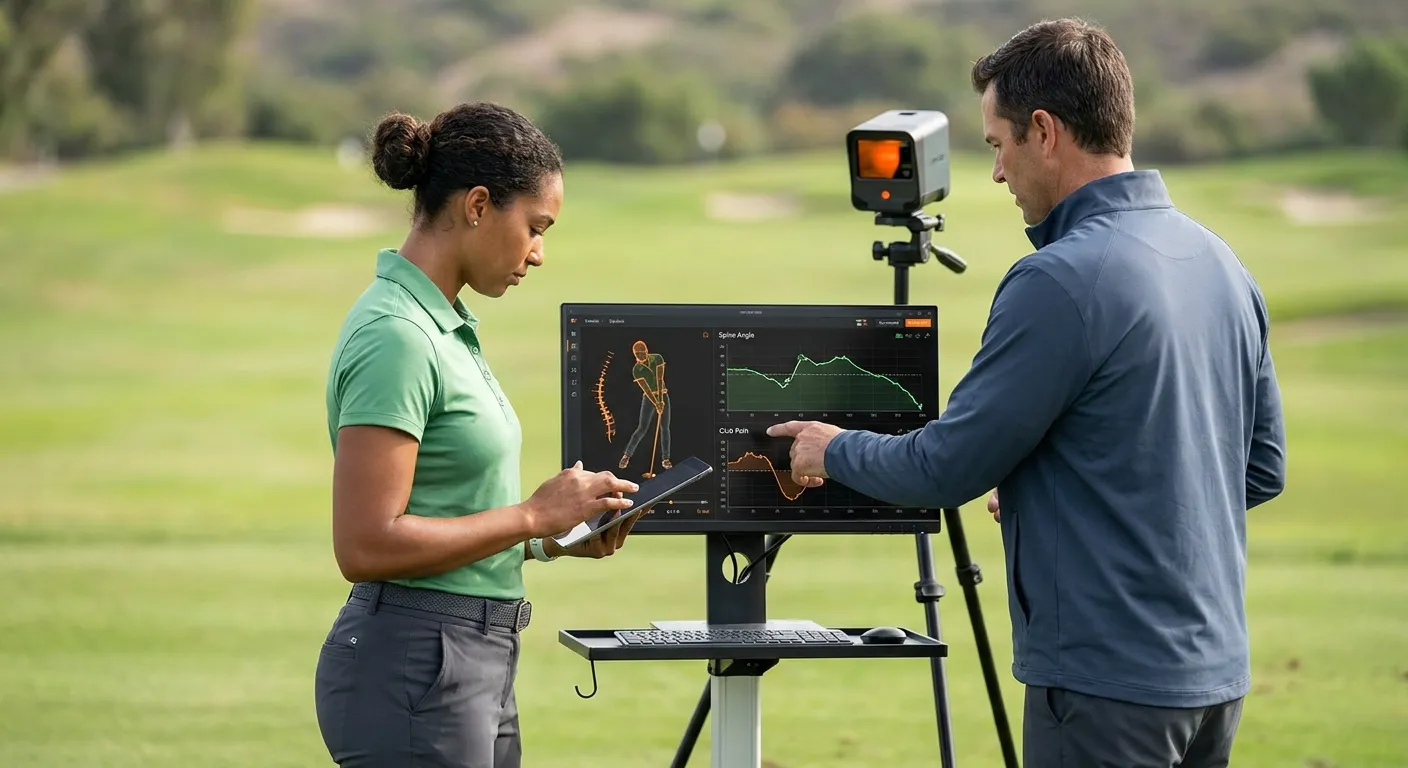
Improving your golf swing can feel like a complex puzzle. However, with the right guidance and modern technology, it becomes much more manageable. Learning to use golf swing analysis tools can provide invaluable feedback. This helps you refine your technique and build confidence on the course. At Golf Luxor, we believe in straightforward, fluff-free advice, especially when it comes to harnessing tech for your game.
The golf world is currently experiencing an exciting transformation. Notably, record participation—over 29 million U.S. on-course golfers in 2025—means many are looking for ways to improve efficiently. This surge, combined with the pervasive integration of Artificial Intelligence (AI) and big data, means there are more accessible devices than ever. These help beginners and intermediate players understand and correct their swing mechanics.
Why Use Golf Swing Analysis Tools?
Gone are the days when sophisticated swing analysis was only for touring pros. Today, affordable and user-friendly devices bring professional-level insights right to your pocket or wrist. These devices offer objective data that a human eye simply can’t capture. They provide instant feedback on critical elements like clubhead speed, tempo, swing path, and launch angle. Consequently, this objective data helps you move beyond guesswork. It allows you to focus on specific, measurable improvements.
For many golfers, the biggest challenge is identifying what needs fixing. Are you coming over the top? Is your tempo inconsistent? Are you losing power at impact? Golf swing analysis tools like those from Arccos, Garmin, deWiz, and Blast Golf cut through the confusion. They track your movements, analyze the results, and often provide personalized advice based on your tendencies. This isn’t about replacing your coach. Instead, it’s about giving you and your coach more precise information to work with. This makes lessons more effective and practice sessions more productive.
Understanding the Tech: What’s Out There?
Modern golf technology offers a spectrum of solutions for every budget and preference. Therefore, you can find something that fits your needs.
Wearable Sensors and Launch Monitors
Devices like Arccos Caddie Smart Sensors attach to your clubs. They track every shot and provide detailed analytics on distance, club usage, and even approach shot dispersion. Garmin golf watches often include swing metrics and GPS capabilities. These give you real-time data on the course. For more in-depth swing analysis, dedicated devices like deWiz offer precise measurements of your swing plane, transition, and release. This gives you a comprehensive look at your swing’s geometry.
Apps and Simulators
Many apps now integrate with external sensors or use your phone’s camera to record and analyze your swing. Some even offer virtual reality training, particularly beneficial for beginners to grasp fundamental movements in a low-pressure environment. While full simulators are a bigger investment, portable golf launch monitors can connect to apps. They offer similar data points in a more compact setup. This makes them ideal for home use or at the driving range.
High-Speed Cameras and AI Feedback
Advanced systems utilize high-speed cameras to capture every nuance of your swing. These systems often pair with AI algorithms. The AI then processes the footage, identifying common swing faults and suggesting corrections. For example, some platforms can compare your swing to professional models, highlighting specific areas for improvement. This level of detail was once exclusive to professional training centers. Now, it’s becoming more accessible to the everyday golfer.
Choosing the Right Golf Swing Analyzer
Selecting the best golf swing analyzer depends on your specific needs, budget, and skill level. Consider these factors when making your choice:
- Your Skill Level: Beginners might benefit from simpler tools that focus on foundational aspects like tempo and club path. More advanced players may prefer devices offering detailed data on clubhead speed, spin rate, and launch angle.
- Budget: Prices vary widely, from affordable apps and basic sensors to high-end launch monitors and simulator setups. Determine how much you’re willing to invest in your improvement.
- Portability: Do you want a device you can easily take to the range or course? Or are you looking for a more stationary setup for home use? Wearable sensors and portable launch monitors offer excellent flexibility.
- Data Insights: What kind of feedback do you need? Some tools provide basic metrics, while others offer comprehensive reports, 3D swing models, and personalized drills.
- Ease of Use: Look for devices with intuitive interfaces and clear data presentation. You want to spend more time improving your swing and less time figuring out the technology.
Ultimately, the best tool is one you will consistently use. Therefore, choose a device that integrates seamlessly into your practice routine.
How to Integrate Swing Analysis into Your Practice
Having a golf swing analyzer is only the first step. The real magic happens when you effectively integrate it into your practice routine. Here’s how:
Set Clear Goals
Before you start, identify specific areas of your swing you want to improve. Do you want to increase clubhead speed? Are you trying to eliminate a slice? Specific goals will help you interpret the data more effectively. For instance, if you aim to improve your tempo, focus on that metric provided by your chosen device.
Consistent Practice
Regular use of your swing analysis equipment is crucial. Practice sessions, even short ones, become more productive when you receive immediate feedback. This allows for instant adjustments and reinforces positive changes. Many golfers find that using a golf tracker and swing analyzer every time they hit balls helps them build better habits faster.
Work with a Coach
While these tools provide objective data, a qualified golf instructor can help you interpret it and develop a tailored action plan. Share your data with your coach. This collaboration can accelerate your improvement and ensure you’re working on the right things. Moreover, a coach can help you understand the nuances of the data provided by your golf swing analysis tools.
Focus on One or Two Metrics
Avoid getting overwhelmed by too much data. Instead, pick one or two key metrics to focus on during a practice session. For example, if you’re working on your swing path, pay attention to that specific number or visualization. Once you see improvement, you can move on to another area.
Review and Adjust
Regularly review your progress. Most golf swing analysis tools store your data over time, allowing you to track trends and see how your swing is evolving. Adjust your practice plan as needed based on your progress and new insights.
The Benefits of Using Advanced Swing Analysis Technology
Incorporating advanced technology into your golf practice offers numerous advantages beyond simply identifying flaws. For example, these devices can significantly enhance your overall understanding of the game.
Objective Feedback
Human perception can be subjective. However, technology provides objective, measurable data. This eliminates guesswork about what’s happening during your swing. Consequently, you gain a clearer picture of your performance.
Accelerated Learning
Instant feedback allows for immediate correction. This speeds up the learning process. You don’t have to wait for your next lesson to understand what went wrong. Instead, you can make adjustments on the fly. This makes practice more efficient.
Personalized Practice
Every golfer is unique. Golf swing analysis tools provide data specific to your swing. This allows for highly personalized practice sessions tailored to your individual needs and goals. You’re not just following generic advice; you’re addressing your specific challenges.
Increased Confidence
Understanding your swing with data builds confidence. When you know *why* a shot went astray and how to fix it, you approach the course with greater assurance. This newfound confidence often translates into better on-course performance.
Data-Driven Improvement
These devices transform your practice from guesswork to a scientific endeavor. You’re making decisions based on facts, not feelings. This data-driven approach leads to more consistent and sustainable improvement over time. It’s a fundamental shift in how many golfers approach their development.
Popular Golf Swing Analysis Tools on the Market
Many excellent golf swing analysis tools are available today. Each offers unique features and caters to different needs. Here are a few prominent examples:
- Arccos Caddie: This system uses sensors on each club to track every shot. It provides detailed analytics on distances, club usage, and even smart recommendations based on your historical data and course conditions. It’s an excellent tool for on-course performance analysis.
- Garmin Approach Series: Garmin offers a range of golf watches and handheld GPS devices that often include swing metrics. These are ideal for golfers who want integrated on-course data with basic swing analysis capabilities.
- deWiz Golf: This wearable device attaches to your wrist and provides real-time feedback on critical swing parameters like transition, plane, and tempo. It’s known for its precision and ability to help golfers understand the geometry of their swing.
- Blast Golf: Blast Golf sensors attach to the end of your club and provide metrics like clubhead speed, tempo, and attack angle. It’s a popular choice for understanding the dynamics of impact and how it affects your ball flight.
- Foresight Sports GCQuad / GC3: These are high-end launch monitors used by professionals and serious amateurs. They provide incredibly accurate data on ball flight, club data, and impact. While a significant investment, they offer unparalleled insights. Learn more about advanced launch monitor technology by visiting Foresight Sports.
- TrackMan: Another industry leader in launch monitor technology, TrackMan provides comprehensive data on both club and ball. It’s widely used for coaching, club fitting, and professional analysis. You can explore their offerings at TrackMan.
Choosing among these depends on your budget and desired level of detail. Many golfers start with a simpler device and upgrade as their needs evolve.
Conclusion: Embrace Technology for a Better Golf Game
The landscape of golf instruction and practice has evolved significantly. Golf swing analysis tools are no longer just for the pros. They are accessible, powerful resources for every golfer. From wearable sensors tracking every shot to advanced launch monitors providing intricate data, these technologies offer objective feedback. They help refine your technique, and ultimately, build greater confidence on the course. By embracing these innovative tools, you can move beyond guesswork. You can instead focus on measurable improvements. Start exploring the options today and take a significant step towards sharpening your golf game.
FAQ: Frequently Asked Questions About Golf Swing Analysis
What are the primary benefits of using a golf swing analyzer?
Using a golf swing analyzer provides objective data, which helps golfers identify specific flaws in their technique. This leads to faster learning, more personalized practice, and ultimately, improved confidence and performance on the course. It removes the guesswork from swing improvement.
Are these swing analysis devices only for advanced golfers?
Not at all! While professionals certainly benefit, many swing analysis devices are designed with beginners and intermediate players in mind. They offer user-friendly interfaces and clear feedback, making complex swing mechanics easier to understand for all skill levels.
How do I choose the best swing analysis tool for my needs?
Consider your skill level, budget, and desired portability. Beginners might prefer simpler, more affordable options, while serious players might invest in more comprehensive launch monitors. Think about the specific data you want to track and how you plan to use the device in your practice.
Can a swing analysis device replace a golf coach?
No, a swing analysis device complements a golf coach, it does not replace one. The technology provides precise data, but a human coach offers personalized instruction, helps interpret complex data, and guides you through drills. Together, they form a powerful team for improvement.
What kind of metrics do these golf swing trackers typically measure?
Golf swing trackers can measure various metrics. Common ones include clubhead speed, ball speed, tempo, swing path, face angle, launch angle, spin rate, and attack angle. More advanced systems might also provide 3D swing models and detailed impact data.