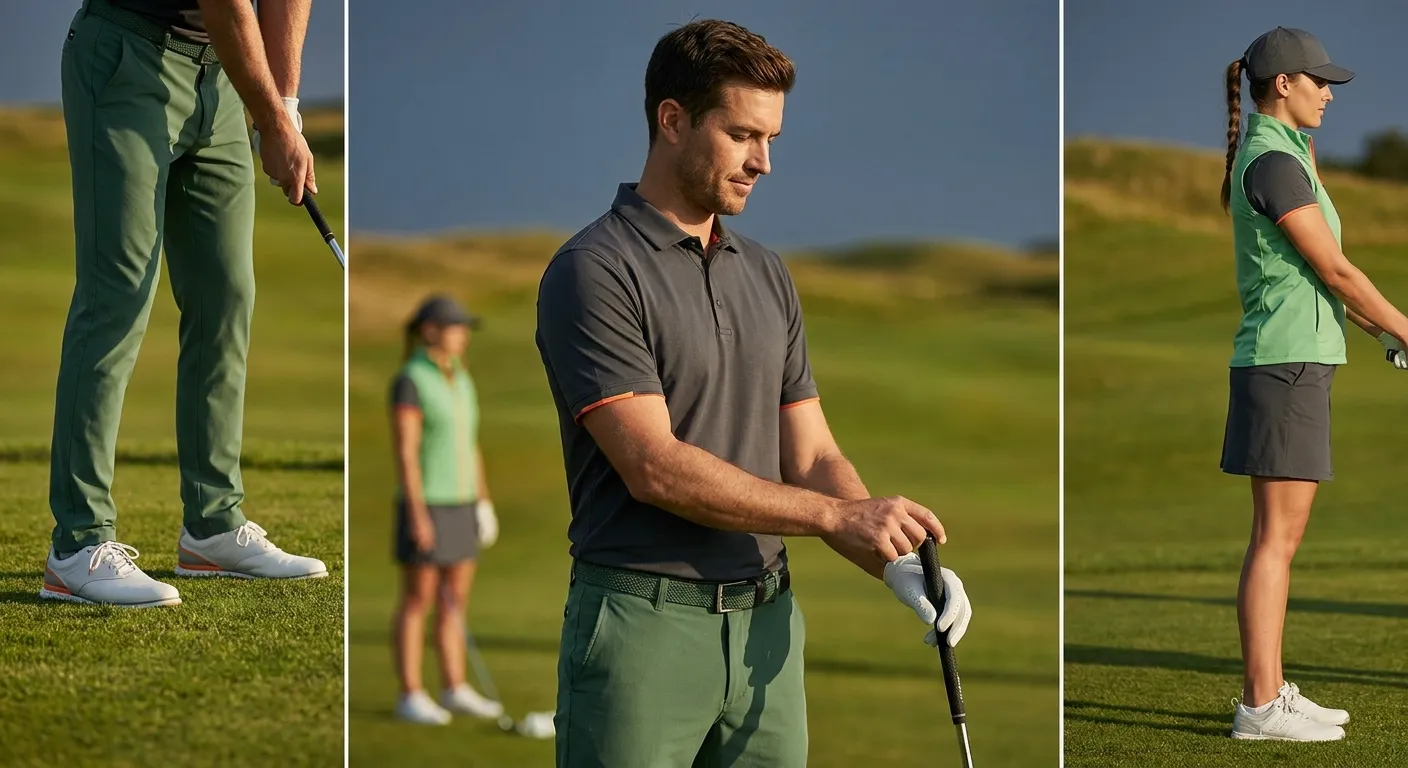
For any aspiring golfer, the journey to a consistent and powerful swing begins long before you hit the ball. It starts with the fundamentals: your grip, stance, and posture. These three elements are the bedrock of every successful shot, yet they are often overlooked or improperly learned by beginners. At Golf Luxor, we believe that understanding and perfecting your golf grip stance posture is the most efficient way to build a reliable swing and unlock your full potential on the course. Let’s break down each component and how they work together.
The Foundation: Understanding Your Golf Grip
Your grip is the only connection you have with the club, making it arguably the most critical fundamental. A proper grip ensures control, power, and consistency. While there isn’t one ‘perfect’ grip for everyone, there are standard techniques.
Interlocking, Overlapping, and Baseball Grips
- Interlocking Grip: This grip is popular among players with smaller hands or less hand strength. It involves interlocking the pinky finger of your trailing hand with the index finger of your lead hand. Consequently, it creates a very unified connection between hands and club.
- Overlapping Grip (Vardon Grip): This is the most common grip among professionals and amateurs alike. Here, the pinky finger of your trailing hand overlaps the index finger of your lead hand. Notably, it provides excellent control and feel.
- Baseball Grip (Ten-Finger Grip): Often recommended for absolute beginners or those with joint issues, all ten fingers are on the club with no overlap or interlock. It offers maximum power, but can reduce feel and control.
Pressure Points and Hand Placement
Regardless of the style you choose, the key is to hold the club primarily in the fingers, not the palm, of your lead hand. The trailing hand then complements this, providing control. Imagine holding a tube of toothpaste; you want a firm but not squeezing grip that won’t squish the paste. Furthermore, the ‘V’ shapes formed by your thumbs and forefingers should point generally towards your trailing shoulder. A consistent grip setup is a crucial part of your overall golf swing mechanics.
Building a Solid Base: Your Golf Stance
Your stance provides the stability and balance needed to execute a powerful and controlled swing. It dictates your alignment and how effectively you can transfer energy. Therefore, getting this right is paramount for consistent ball striking.
Width and Ball Position
- Width: For most full swings, your feet should be roughly shoulder-width apart. This provides a stable base without restricting your turn. Generally, you’ll use a wider stance for drivers and a narrower one for short irons and wedges.
- Ball Position: This changes depending on the club. For a driver, the ball is typically off the heel of your lead foot. For irons, it moves progressively back towards the center of your stance as the club gets shorter. Usually, it’s centered for wedges and short irons.
Alignment Basics
Your feet, hips, and shoulders should be aligned parallel to your target line, like railroad tracks. Many beginners struggle with aiming too far right or left without realizing it. A simple drill involves placing two clubs on the ground: one pointing at your target and the other parallel to it, just inside your feet. This visual aid helps you practice proper alignment. In addition, always pick an intermediate target a few feet in front of the ball to help with your aim.
The Crucial Link: Your Golf Posture
Posture is the link between your grip and stance, significantly impacting your balance, swing plane, and power. Good posture allows for a free and athletic swing. Conversely, poor posture can lead to many common golf swing faults. For example, a hunched back can restrict your shoulder turn.
Key Elements of Proper Posture
- Slight Knee Flex: Your knees should be slightly flexed, not locked. This allows for athletic movement and shock absorption during the swing.
- Bend from the Hips: Bend forward from your hips, not your waist. This keeps your spine relatively straight and allows your arms to hang naturally below your shoulders. Your weight should feel balanced over the balls of your feet, not on your heels or toes.
- Arms Hanging Naturally: Your arms should hang freely from your shoulders, creating a slight triangle with your shoulders and hands. This promotes a natural swing path. Avoid reaching for the ball or tucking your elbows in too tightly.
Mastering your golf grip stance posture lays the groundwork for every other aspect of your swing. It’s a fundamental that demands attention and practice.
How Grip, Stance, and Posture Work Together
These three fundamentals are not isolated components; they are interconnected and influence each other significantly. A solid golf grip allows for better control, which is then supported by a stable stance. This stable base, combined with proper posture, enables a full and unrestricted turn, ultimately leading to more power and accuracy. For instance, if your posture is too upright, your arms might not hang correctly, affecting your grip pressure. Similarly, an incorrect stance width can throw off your balance, making it harder to maintain good posture throughout the swing.
Consider the entire setup as a kinetic chain. Each link must be strong for the whole chain to function effectively. Therefore, practicing these elements together, rather than in isolation, is incredibly beneficial. Many experienced golfers still dedicate time to refining their pre-shot setup, understanding its profound impact on performance. This consistent routine helps to ingrain good habits. You can learn more about the importance of a consistent pre-shot routine by visiting our guide on The Underrated Power of a Consistent Pre-Shot Routine in Golf.
Common Mistakes and How to Fix Them
Even with a good understanding of the principles, beginners often make common mistakes with their initial setup. Being aware of these pitfalls can help you identify and correct them early on.
Over-Gripping the Club
Many new golfers squeeze the club too tightly, leading to tension in the forearms and shoulders. This tension restricts clubhead speed and reduces feel. Instead, aim for a grip pressure similar to holding a small bird – firm enough not to let it fly away, but gentle enough not to crush it. Regular checks of your grip pressure before each shot can help. Furthermore, practice drills where you swing with varying grip pressures can help you find the sweet spot.
Incorrect Stance Width or Ball Position
An overly narrow or wide stance compromises balance. Similarly, an incorrect ball position can lead to slices, hooks, or thin/fat shots. Use alignment sticks or even your golf clubs on the ground to visually check your stance width and ball position. Practice hitting balls with different clubs, paying close attention to where the ball is placed in relation to your feet. This builds muscle memory for proper setup. For more detailed insights into common issues, explore our article on Common Golf Swing Faults and Easy Fixes for Beginners.
Hunching or Standing Too Upright
Poor posture limits your ability to rotate freely and maintain balance. If you’re hunching, you might find your back hurting after a round. If you’re too upright, you might struggle to make solid contact. Stand tall, then bend from your hips, allowing your arms to hang naturally. Use a mirror to check your posture from the side. Ensure your back is relatively straight, and your weight is slightly forward on the balls of your feet. This athletic position is key to a dynamic swing.
Drills to Improve Your Golf Grip, Stance, and Posture
Consistent practice is essential for ingraining these fundamental movements. Here are some simple drills you can do at home or on the range.
Grip Check Drill
Take your normal grip, then remove your trailing hand. Can you still support the club with just your lead hand? This helps ensure your lead hand is doing its job. Then, re-apply your trailing hand and check the ‘V’s formed by your thumbs and forefingers. Repeat this several times. This drill reinforces the proper hand placement and pressure points. Moreover, it helps build confidence in your grip.
Alignment Stick Drill
Place two alignment sticks on the ground. One points directly at your target, and the other is parallel to it, positioned for your feet. Practice setting up to the parallel stick, ensuring your feet, hips, and shoulders are all aligned correctly. This drill is excellent for developing a reliable aiming routine. You can also use this to check your ball position for different clubs. Many pros use this drill daily to maintain their consistency. For advanced training, consider how Effective Golf Practice Drills can further refine your game.
Mirror Posture Drill
Stand in front of a full-length mirror with a club. Practice getting into your setup position, paying close attention to your posture. Check for a slight knee flex, a bend from the hips, and arms hanging naturally. Look for any signs of hunching or being too upright. This visual feedback is invaluable for making immediate corrections. It allows you to see what a proper golf grip stance posture truly looks like.
The Long-Term Benefits of a Solid Foundation
Investing time in perfecting your golf grip stance posture will pay dividends on the course. You’ll experience greater consistency in your ball striking, leading to more shots finding the fairway and green. Furthermore, a solid foundation reduces the likelihood of developing bad habits that are difficult to correct later. It also contributes to better balance and power transfer, resulting in longer and more accurate shots. Ultimately, this leads to more enjoyable rounds and lower scores. According to the PGA Tour, even professional golfers continuously refine their fundamentals.
Furthermore, a proper setup can help prevent injuries. When your body is in an athletic and balanced position, the stresses of the golf swing are distributed more effectively. This reduces strain on your back, knees, and other joints. Think of it as building a house: a strong foundation ensures the entire structure is stable and durable. Similarly, a strong golf grip, stance, and posture ensure your swing is stable and repeatable. The USGA also emphasizes the importance of fundamentals for all levels of play, as detailed on their official website.
By consistently focusing on these core elements, you are not just learning to swing a club; you are learning to play golf effectively and safely. This dedicated approach sets the stage for continuous improvement throughout your golfing journey. Moreover, it fosters a deeper understanding of cause and effect in your swing, empowering you to self-correct when things go awry. Remember, the journey to becoming a better golfer is a continuous one, built on solid fundamentals.
Conclusion
Mastering your golf grip stance posture is not merely a suggestion; it’s a fundamental requirement for anyone serious about improving their golf game. These three elements are the non-negotiable building blocks upon which a consistent, powerful, and repeatable swing is constructed. By dedicating time to understanding, practicing, and refining your grip, stance, and posture, you will lay a solid foundation that supports every other aspect of your game. Embrace these fundamentals, and you’ll soon see a remarkable transformation in your confidence and performance on the golf course. At Golf Luxor, we are committed to helping you achieve your golfing aspirations, one fundamental at a time. Keep practicing, stay patient, and enjoy the journey.
FAQ
What are the three most important golf fundamentals?
The three most important golf fundamentals are your grip, stance, and posture. These elements form the bedrock of a consistent and effective golf swing.
How does proper club holding improve my golf swing?
Proper club holding, or grip, is crucial for maintaining control of the club throughout the swing. It ensures you can generate power and deliver the clubface squarely to the ball, leading to more accurate and consistent shots.
Why is a good setup position essential in golf?
A good setup position, encompassing your stance and posture, provides stability, balance, and proper alignment. It allows for a free and athletic rotation, which is essential for generating power and maintaining control during your swing.
What are common errors in golf setup?
Common errors in golf setup include gripping the club too tightly, having an incorrect stance width or ball position, and poor posture such as hunching over or standing too upright. Addressing these can significantly improve your game.
How can I practice my golf setup at home?
You can practice your golf setup at home using drills like the grip check drill to ensure proper hand placement, the alignment stick drill (even with household items) to check your aiming, and the mirror posture drill to visually confirm your body’s athletic position.