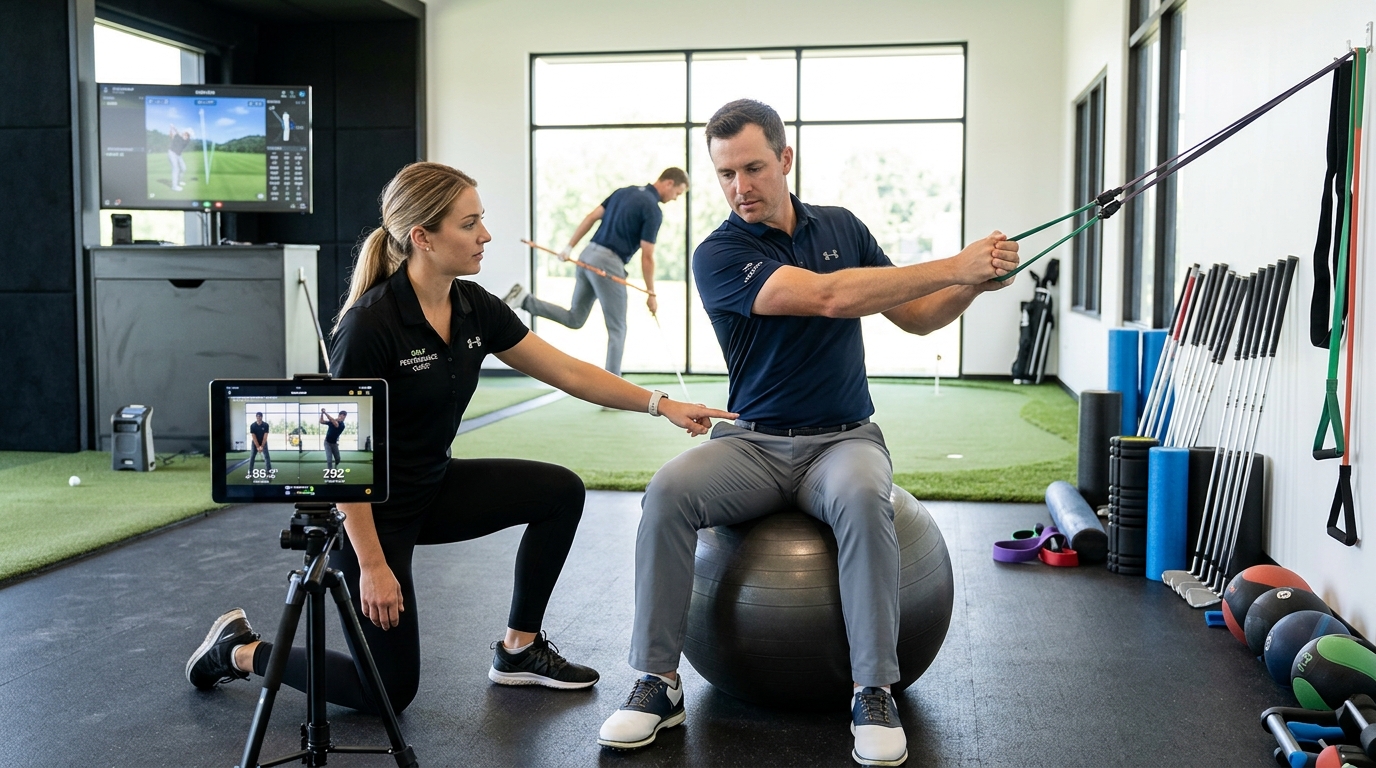
Every golfer wants more power, yet many overlook the simplest path to achieving it. Instead of swinging harder, improving golf turn flexibility allows you to generate speed naturally and efficiently. When your body moves freely, your swing becomes smoother, more controlled, and far more powerful without added effort.
At first, players often focus on strength or technique. However, restricted movement limits both. Tight hips, stiff shoulders, and poor rotation prevent the body from loading properly. As a result, energy leaks out of the swing before impact. This is why golf turn flexibility plays such a crucial role in unlocking effortless distance and consistency.
When flexibility improves, the body begins to work as a connected system. The backswing becomes fuller, the transition feels smoother, and the downswing gains natural speed. Over time, golfers notice not only longer shots but also better accuracy and control.
Why Flexibility Drives Power in the Golf Swing
Power in golf does not come from brute force. Instead, it comes from the efficient transfer of energy through the body. Golf turn flexibility allows this transfer to happen seamlessly, creating a chain reaction from the ground up.
As the body coils during the backswing, it stores energy like a spring. The more effectively it can turn, the more energy it can store. Then, during the downswing, that stored energy releases rapidly, producing speed without strain. Without proper flexibility, this coil becomes limited, and power suffers.
Moreover, flexibility reduces compensations. When one area of the body is tight, another area must work harder. This often leads to inconsistent swings and even injuries. By improving golf turn flexibility, players can maintain balance and control throughout the motion.
Common Mobility Limitations That Hold You Back
Many golfers struggle with flexibility without realizing it. Tight hips are one of the most common issues. When the hips cannot rotate properly, the upper body compensates, leading to an over-the-top swing or loss of balance.
Shoulder stiffness is another major factor. Limited shoulder mobility restricts the backswing, making it difficult to create width and depth. As a result, swings become shorter and less powerful.
Additionally, the thoracic spine plays a critical role. This part of the spine allows for rotation in the upper body. When it becomes stiff, the entire swing loses fluidity. Improving golf turn flexibility in these areas creates immediate improvements in movement and performance.
How to Improve Rotation Without Forcing It
Many players try to force a bigger turn, but this often leads to tension. Instead, the goal is to improve mobility so the body can turn naturally. Golf turn flexibility should feel relaxed and controlled, not strained.
Start by focusing on your setup. A balanced stance allows for better rotation from the beginning. Then, during the swing, think about turning your shoulders around your spine rather than lifting or swaying.
Breathing also plays a role. When you hold your breath, your muscles tighten. By breathing steadily, you allow your body to stay loose and responsive. Over time, this creates a more natural and efficient turn.
Simple Daily Movements That Build Flexibility
Improving flexibility does not require hours of training. In fact, consistent, simple movements often produce the best results. Golf turn flexibility improves gradually when practiced regularly.
- Hip rotations help increase mobility in the lower body, allowing for a deeper and more stable turn.
- Thoracic twists improve upper body rotation, making the backswing smoother and more complete.
- Shoulder stretches create better range of motion, helping maintain width in the swing.
- Dynamic warm-ups prepare the body before playing, reducing stiffness and improving movement.
By incorporating these movements into your routine, you build a foundation for better performance. Even a few minutes each day can lead to noticeable improvements.
Connecting Flexibility to Effortless Power
As flexibility improves, power begins to feel effortless. Instead of forcing the swing, players start to rely on timing and sequence. Golf turn flexibility allows the body to move in harmony, creating speed without tension.
The transition from backswing to downswing becomes smoother. This is where many golfers lose power. However, with better mobility, the body can shift naturally, maintaining energy through impact.
Additionally, flexibility enhances rhythm. A smooth rhythm leads to better timing, which directly affects distance and accuracy. When everything works together, the swing feels almost automatic.
Maintaining Consistency Through Better Movement
Consistency is one of the biggest challenges in golf. While technique matters, movement quality often determines reliability. Golf turn flexibility helps create repeatable swings by reducing variability.
When the body moves freely, it follows the same pattern more easily. This reduces the chances of compensations and errors. As a result, shots become more predictable.
Furthermore, improved flexibility supports endurance. Over a full round, fatigue can affect performance. However, when the body is not fighting against stiffness, it maintains efficiency for longer periods.
The Mental Benefits of a Freer Swing
Physical improvements often lead to mental benefits as well. When players trust their movement, they feel more confident. Golf turn flexibility contributes to this confidence by making the swing feel natural and reliable.
Instead of overthinking mechanics, players can focus on strategy and execution. This shift in mindset reduces pressure and improves decision-making.
Additionally, a relaxed body promotes a calm mind. When tension decreases, focus improves. This combination creates a more enjoyable and effective playing experience.
Building a Sustainable Routine for Long-Term Gains
Improving flexibility is not a one-time effort. It requires consistency and patience. However, the benefits continue to grow over time. Golf turn flexibility becomes a long-term asset that supports every aspect of the game.
Start by setting realistic goals. Focus on small improvements rather than immediate results. Track your progress and adjust your routine as needed.
Moreover, listen to your body. Avoid pushing through pain or discomfort. Instead, aim for gradual and steady improvement. This approach ensures lasting results without risk of injury.
Conclusion: Unlocking Power Through Better Movement
True power in golf does not come from force. It comes from freedom of movement and efficient energy transfer. Golf turn flexibility provides the foundation for this process, allowing players to swing with ease and confidence.
As flexibility improves, every part of the game benefits. Distance increases, consistency improves, and the overall experience becomes more enjoyable. Instead of chasing power, golfers can simply unlock it through better movement.
In the end, the goal is not just to hit the ball farther, but to do so effortlessly. By focusing on flexibility, players create a swing that feels natural, balanced, and powerful. This is where lasting improvement begins.
FAQ
1. How long does it take to improve rotation in golf?
Results vary, but consistent practice can lead to noticeable improvements within a few weeks.
2. Can flexibility increase driving distance?
Yes, better mobility allows for a fuller turn and more efficient energy transfer, which increases distance.
3. Is stretching enough to improve mobility?
Stretching helps, but combining it with dynamic movements produces better long-term results.
4. Should beginners focus on flexibility early?
Absolutely, developing mobility early prevents bad habits and supports better technique.
5. What is the biggest mistake golfers make with their turn?
Many try to force rotation instead of improving mobility, which creates tension and reduces power.