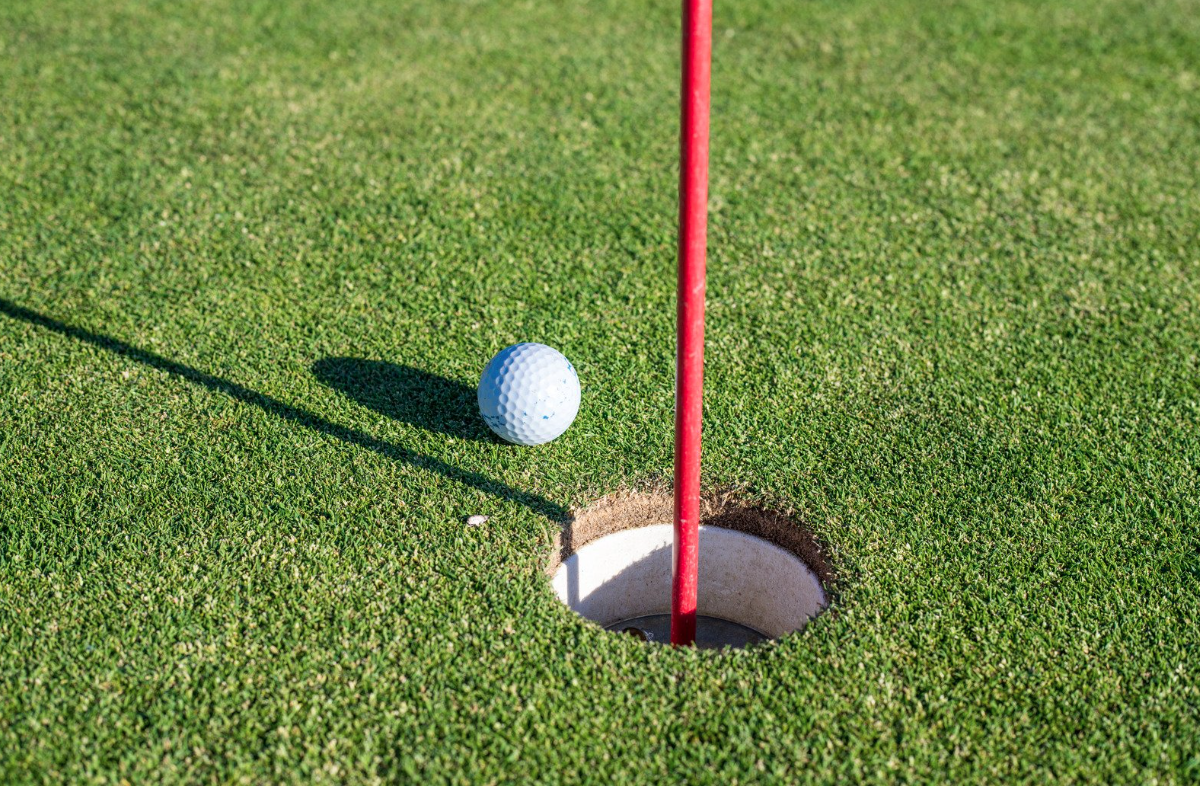
If you want to lower your scores quickly, you must learn how to fit a putter correctly. Putting accounts for nearly half your strokes in a round. Yet many golfers spend more time choosing drivers than selecting the right putter.
That’s a mistake.
The putter is your scoring club. If it doesn’t match your posture, stroke, and eye position, accuracy suffers. Distance control becomes inconsistent. Confidence fades.
Think of your putter like a precision instrument. Even small adjustments can produce dramatic results. A properly fitted putter aligns your eyes correctly, balances your stroke, and promotes cleaner contact.
Let’s walk through how to fit a putter correctly so you can hole more putts and enjoy greater consistency on the greens.
Why You Must Fit a Putter Correctly
Many golfers use whatever putter feels comfortable in the store. However, comfort without fitting can lead to subtle alignment errors.
If the putter is too long, you may stand too upright. If it’s too short, you may hunch over. Both positions affect stroke path and face angle.
Additionally, improper lie angle can cause the toe or heel to lift off the ground. That changes how the face contacts the ball.
When you fit a putter correctly, you eliminate these hidden inefficiencies. Your stroke becomes more repeatable. Repeatability leads to accuracy.
Putting is about precision, not power.
Step 1: Determine the Correct Putter Length
Length is the foundation of proper fitting.
Most standard putters range from 33 to 35 inches. However, the correct length depends on your height, posture, and arm length.
To fit a putter correctly, assume your natural putting stance. Let your arms hang comfortably. Your eyes should ideally be positioned directly over or slightly inside the ball line.
If the putter is too long, your eyes may sit too far inside. If it is too short, your posture may feel cramped.
Proper length allows relaxed shoulders and balanced posture.
When posture feels stable, stroke consistency improves immediately.
Step 2: Adjust the Lie Angle
Lie angle determines how the putter sole rests on the ground at address.
If the toe lifts off the ground, the lie angle is too upright. If the heel lifts, it is too flat.
Improper lie angle affects face direction at impact. Even small deviations can cause missed putts.
To fit a putter correctly, ensure the sole sits flat when you assume your natural stance.
Professional fitters use lie boards or impact tape to measure this precisely.
Correct lie angle promotes square contact and consistent roll.
Step 3: Choose the Right Putter Head Style
Blade or mallet? That decision matters.
Blade putters are compact and often suit players with strong arc strokes. They provide excellent feedback.
Mallet putters offer higher forgiveness and stability. They are often ideal for straight-back, straight-through strokes.
To fit a putter correctly, match head style to your stroke type.
If your stroke has significant arc, a toe-hang blade may feel natural. If your stroke is straighter, a face-balanced mallet may provide better control.
The right head style stabilizes your natural motion rather than forcing change.
Step 4: Select Proper Loft
Putter loft influences roll quality.
Standard putter loft ranges between 2 and 4 degrees. However, individual stroke tendencies affect optimal loft.
If you press your hands forward significantly at address, effective loft decreases. That may cause the ball to skid before rolling.
If your hands are behind the ball, loft increases.
To fit a putter correctly, loft should produce immediate forward roll without excessive bounce or skid.
Launch monitor tools measure roll efficiency precisely. However, simple observation works too. The ball should begin rolling quickly after impact.
Smooth roll equals better distance control.
Step 5: Grip Size and Comfort
Grip size affects wrist action and tension.
Smaller grips allow more wrist movement. Larger grips reduce wrist action and promote shoulder-driven strokes.
Many golfers benefit from midsize or oversized grips, especially if they struggle with excessive hand movement.
To fit a putter correctly, choose a grip that promotes stability without discomfort.
Comfort encourages relaxation. Relaxation improves feel.
The right grip supports your natural stroke pattern.
Step 6: Align Eye Position for Accuracy
Eye alignment plays a major role in putting accuracy.
If your eyes sit too far inside the ball, aim may drift right. If too far outside, aim may drift left.
Use a simple mirror drill. Position a mirror on the ground and assume your stance. Your eyes should ideally align over the ball or slightly inside.
When you fit a putter correctly, length and lie angle combine to support ideal eye position.
Proper alignment reduces unnecessary stroke adjustments.
Step 7: Match Stroke Type to Toe Hang
Toe hang describes how the putter head balances when suspended.
If the toe points downward, the putter has toe hang. If the face points upward, it is face-balanced.
Golfers with strong arcs benefit from more toe hang. Straight strokes typically favor face-balanced designs.
To fit a putter correctly, evaluate your stroke path before selecting toe hang characteristics.
Matching design to motion enhances natural rhythm.
The Importance of Professional Putter Fitting
While self-evaluation helps, professional fitting provides precise measurements.
Launch monitors measure face angle, path, impact location, and roll efficiency.
Even small adjustments in loft or lie can produce measurable improvements.
When you fit a putter correctly through data analysis, guesswork disappears.
Investing in fitting often yields immediate scoring benefits.
Common Mistakes When Fitting a Putter
Choosing based on appearance alone
Ignoring posture and eye alignment
Overlooking grip size
Selecting head style without considering stroke type
Skipping lie angle adjustments
Avoiding these errors increases the likelihood of long-term success.
Putting rewards attention to detail.
How Proper Fitting Builds Confidence
Confidence begins at address.
When your putter feels balanced and aligned correctly, hesitation disappears.
You commit to your line. You trust your stroke.
When you fit a putter correctly, you remove doubt from the equation.
Doubt often causes more missed putts than poor mechanics.
Clarity produces calm strokes.
Conclusion: Precision Leads to Lower Scores
To fit a putter correctly is to respect the importance of detail. Length, lie, loft, grip, and head style all influence accuracy.
A properly fitted putter promotes square contact, smooth roll, and consistent distance control.
Putting is about repetition. Repetition requires proper equipment.
When your putter matches your stroke and posture, improvement follows naturally.
Lower scores do not always require swing changes. Sometimes, they require smarter fitting.
Take the time to fit your putter correctly. Your scorecard will thank you.
FAQs
- How do I know if my putter is the wrong length?
If your posture feels strained or your eyes are far inside or outside the ball line, length may need adjustment. - What is the ideal putter loft?
Most golfers use 2 to 4 degrees, but proper loft depends on hand position and stroke. - Should I use a blade or mallet putter?
Blade putters suit arc strokes, while mallets often benefit straighter strokes. - Does grip size affect putting accuracy?
Yes, larger grips reduce wrist action and may improve consistency. - Is professional fitting necessary?
While not mandatory, professional fitting provides precise data and often improves accuracy quickly.