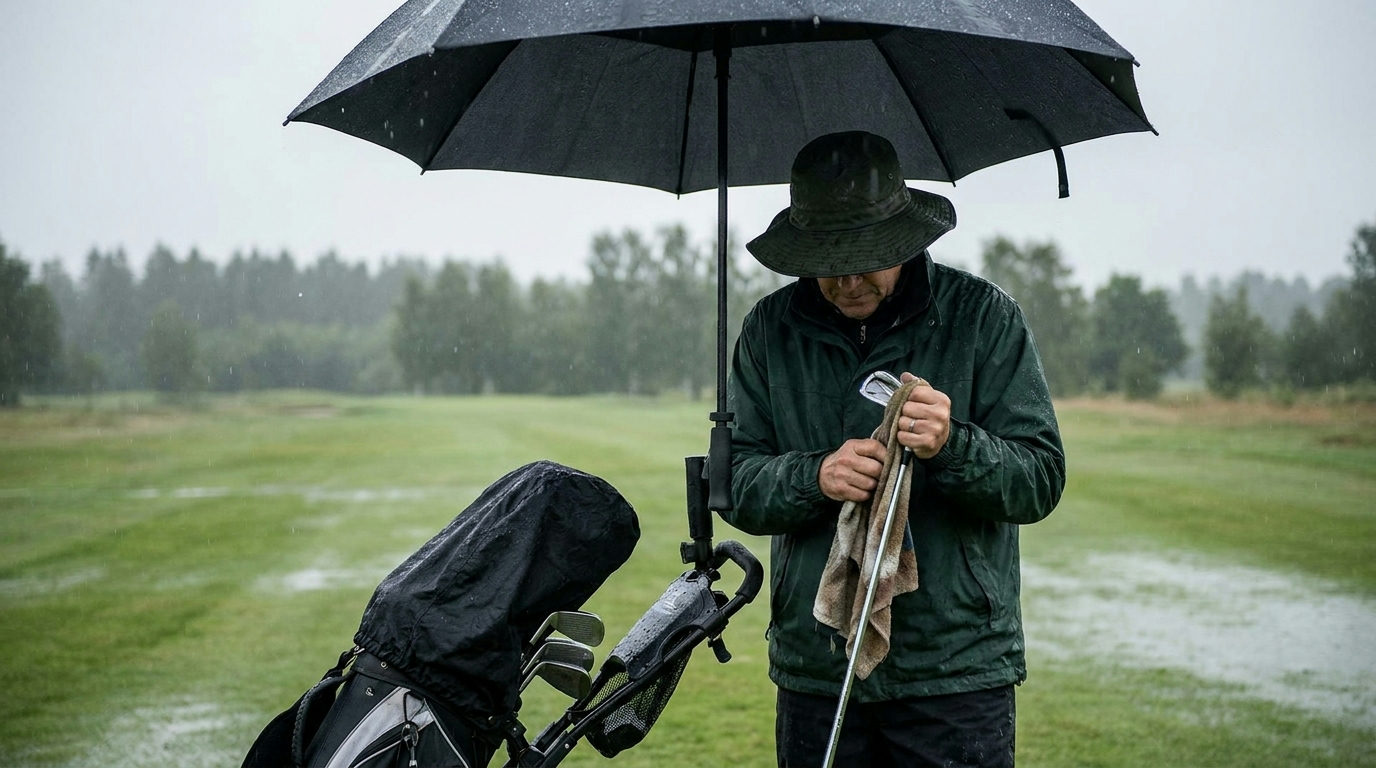
Knowing how to play golf in the rain turns a soggy round from a write-off into a decent day out. Wet weather changes how the ball flies, how it lands and how well you can hold the club. With some simple packing, a few small adjustments and the right attitude, you can stay comfortable and still play sensible golf.
Who this guide is for
This guide is for beginner and intermediate golfers who don’t want a damp forecast to cancel their game. It covers what to pack, how to keep your grips dry, and how to adjust your shots, bunker play and putting on wet days. It also explains when to stop. Rain is fine to play in, but storms are not, so safety always comes first.
What to pack for a wet round
Most of the battle happens before you reach the first tee. Pack your bag the night before so nothing gets forgotten.
- Waterproof jacket and trousers. Choose a set you can swing in freely, and try a few practice swings in them at home.
- A waterproof hat. A wide brim helps keep water off your face and the back of your neck.
- Several towels. Carry at least a couple: one to stay dry under the umbrella or hood for grips and hands, and one for wiping clubheads and balls.
- Spare gloves. Bring a few, and swap them as they get wet. Some golfers like rain gloves, which are designed to grip when damp.
- An umbrella. A large golf umbrella keeps you, your towel and your grips drier between shots.
- A rain hood or cover for your bag. Fit it before you leave the car park.
- Waterproof shoes. Shoes with good grip help you stay steady on wet grass.
- A plastic bag. Keep your scorecard, phone and spare gloves inside it.
Keeping grips and hands dry
Dry grips are the most important thing you can control. Once the grips get wet, many golfers squeeze harder, and that tension can affect the swing.
- Keep the rain hood on your bag between shots and only lift it to take out a club.
- Hang a dry towel from the umbrella spokes or inside the bag hood, out of the rain.
- Before each shot, wipe the grip and your hands with that dry towel.
- Hold the umbrella over your bag and the club until you are ready to swing.
- Put your glove in your pocket or under cover while you walk, then swap to a dry one when it gets damp.
- After the shot, wipe the clubhead with your wet towel and the grip with the dry one before it goes back in the bag.
If your grips feel slippery despite all this, try a slightly softer grip pressure and a smoother tempo rather than squeezing harder.
Club selection for golf in the rain
Learning how to play golf in the rain means accepting that the ball behaves differently. In plain terms, wet ground and heavy, damp air usually mean the ball flies a little shorter and stops more quickly when it lands.
- Expect less roll. On dry days the ball may run on after landing. On wet days, plan for it to stop close to where it lands.
- Take more club. Many coaches suggest taking a club more than usual and swinging smoothly, rather than forcing a shorter club.
- Play to the middle. Aim for the centre of the green, because a smooth swing in waterproofs is less precise.
- Tee it a touch higher. On soft tees, some golfers find a slightly higher tee helps the ball carry rather than run.
- Use the ball as your guide. Watch your first few approach shots, then adjust your club choice for the rest of the round.
Playing from wet lies and bunkers
Wet turf can grab the club, so clean contact matters even more than usual.
From the fairway
- Play the ball around the middle of your stance.
- Focus on striking the ball first, then the turf.
- Think “sweep” rather than “dig” with longer clubs, so the club doesn’t bury itself.
- Keep your swing a little shorter and stay balanced on slippery ground.
From the rough
Wet grass can come between the face and the ball. That often makes the ball come out with less spin, so it may fly or roll less predictably. In heavy, wet rough, simply aim to get back to the fairway.
From bunkers
Wet sand is usually firmer and heavier than dry sand. As a result, the club tends to bounce or dig differently. Try these adjustments and see how the ball reacts:
- Open the face a little less than you would in soft, dry sand.
- Enter the sand slightly closer behind the ball.
- Make a full, committed swing and keep moving through the sand.
- If a bunker is full of standing water, check the official Rules of Golf or ask at the clubhouse about your options.
Putting on slower greens
Wet greens are usually slower than dry ones. The ball also tends to break less, because it rolls more slowly and with less freedom.
- Hit a few practice putts before the round to judge the speed.
- Make a slightly firmer, more positive stroke than you normally would.
- Play a little less break than you see.
- Clear any loose water or debris on your line if the rules allow it, and wipe the ball before you replace it.
- Keep the putter grip dry, just like your other clubs.
How to play golf in the rain: pace and mindset
Part of how to play golf in the rain is mental. Rain tests your patience as much as your swing. A steady, positive attitude helps you make better decisions.
- Keep moving. Walk briskly between shots, without rushing, to stay warm.
- Simplify your routine. Do your thinking under the umbrella, then step in and swing.
- Lower your expectations a little. Scores often rise in the rain for everyone, so judge yourself on good decisions.
- Enjoy the challenge. Quiet courses and fresh air can make wet rounds surprisingly pleasant.
Stopping for thunder and lightning
Rain is one thing; storms are another. Leave the course at any sign of thunder or lightning and follow the club’s instructions. Don’t wait to finish the hole. If the club sounds a siren or horn to suspend play, stop straight away and head for proper shelter as directed.
Rainy-day troubleshooting checklist
| Problem | Likely cause | What to try |
|---|---|---|
| Club slipping in your hands | Wet grips or glove | Dry towel before every shot; swap to a spare glove |
| Approach shots coming up short | Less carry and no roll | Take more club and swing smoothly |
| Heavy contact | Club digging into soft turf | Ball first, shorter swing, sweep with longer clubs |
| Bunker shots flying too far | Firm, wet sand | Less open face, enter closer to the ball |
| Putts stopping short | Slow, wet greens | Firmer stroke, play less break |
| Restricted swing | Waterproofs feel tight | Practise swings in them at home first |
New to the game? Our Beginners’ Corner has more simple guides for your first seasons.
Where to read more: PGA.com’s tips for playing in the rain and Golf Monthly’s wet-weather tips.
Key takeaways
- Pack waterproofs, several towels, spare gloves, an umbrella and a bag hood.
- Keep one towel dry and wipe your grips and hands before every shot.
- Expect less carry and less roll, so take more club and play to the middle.
- Strike the ball first from wet lies, and adjust for firmer sand in bunkers.
- Putt a little firmer on slower greens and play less break.
- Leave the course at any sign of thunder or lightning and follow the club’s instructions.
Once you know how to play golf in the rain, a grey forecast becomes just another set of conditions to manage rather than a reason to stay at home.
Written by the Golf Luxor Editorial desk. Disclosure: this guide contains no affiliate or sponsored links.