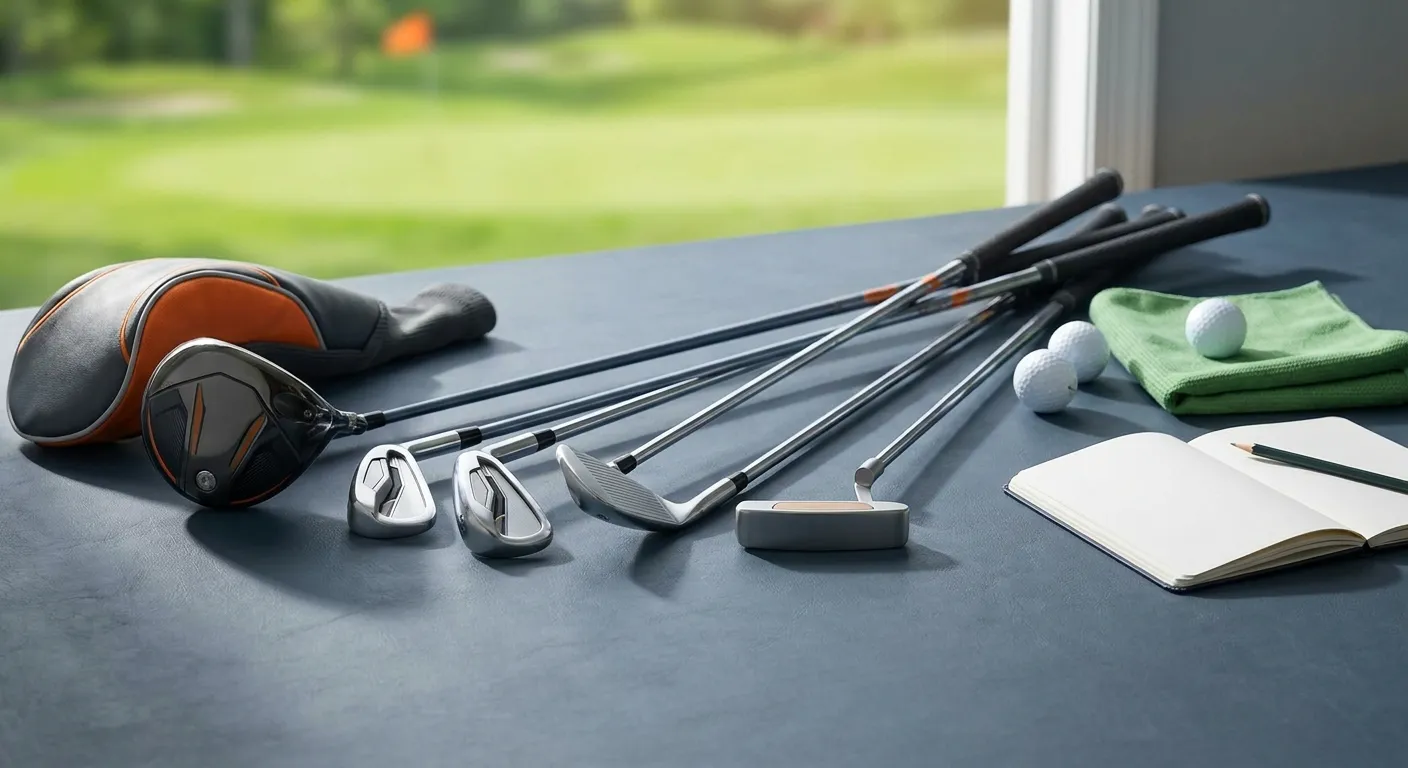
The world of golf equipment can feel overwhelming, especially when you’re just starting out. With a vast array of clubs, brands, and technologies, it’s easy to believe you need a full 14-club set right from the start. However, current industry advice for new players is clear: “Start With the Right Gear (and Don’t Overdo It).” Understanding the essential golf clubs for beginners can save you money, simplify your learning curve, and get you on the course faster. Golf Luxor helps you cut through the noise, offering straightforward advice on building your first effective, minimalist set.
Less is More: The Minimalist Approach to Your First Set
For beginner and intermediate golfers, a full bag of clubs is often unnecessary and can even be a hindrance. Focusing on a few versatile clubs allows you to master their feel and develop a consistent swing. This aligns with the 2026 equipment market trend focusing on consistency over raw distance, especially for new players.
The Core Four (or Five): What You Actually Need
A minimal set of clubs is truly sufficient to start playing and enjoying the game. We recommend focusing on these essential golf clubs for beginners:
- Driver (or 3-Wood): For hitting off the tee on longer holes. A 3-wood is often more forgiving and easier to control for new players than a driver.
- 7-Iron: This is your workhorse club for mid-range shots, perfect for learning swing mechanics and getting comfortable with iron play.
- Pitching Wedge (PW): Crucial for shorter approach shots to the green and getting out of light rough around the green.
- Putter: You’ll use this on every hole, so a comfortable putter is non-negotiable.
Adding a Hybrid (like a 4-hybrid) can also be beneficial, as they are easier to hit than long irons and offer good distance. With these 4-5 clubs, you can confidently play any course and learn all aspects of the game without feeling bogged down by too many choices.
Smart Starting Options: Rent, Borrow, or Buy Used?
Before investing in a brand new set, consider these options:
- Rent: Many golf courses offer club rentals, allowing you to try different types of clubs without commitment.
- Borrow: Ask friends or family if they have older clubs you can use. This is a great way to get a feel for the game.
- Buy Used: Secondhand clubs are an excellent value. Check local pro shops, online marketplaces, or specialized used golf equipment retailers. This allows you to get quality clubs at a fraction of the cost, making it easier to acquire essential golf clubs for beginners.
Finding Your Fit: Beyond Brand Names
When it comes to equipment, comfort and suitability for your swing speed are far more important than famous brands. Your clubs should feel natural in your hands and through your swing. Don’t be swayed solely by marketing or what the pros use. Go to a golf store and try swinging different clubs. Pay attention to how they feel. Furthermore, consider getting a basic club fitting, even as a beginner. This ensures the club length and grip size are appropriate for your physique, which can significantly improve your consistency and enjoyment. Many golf stores offer complimentary basic fittings.
Understanding Club Characteristics for New Players
Different clubs have varying characteristics designed for different skill levels. For new players, forgiveness is key. Look for clubs with larger clubheads, a wider sweet spot, and perimeter weighting. These design features help minimize the impact of off-center hits, meaning your mishits will still travel a reasonable distance and stay somewhat on target. For instance, a cavity-back iron is generally more forgiving than a blade-style iron. Similarly, a larger driver head (up to the legal limit of 460cc) will offer more forgiveness than a smaller one. These considerations are vital when selecting your first golf club.
The Importance of a Good Grip
Often overlooked, the grip of your club is your only direct connection to the club. A comfortable and correctly sized grip is paramount. Grips come in various sizes (standard, midsize, oversized) and materials. Too small a grip can lead to over-gripping and tension, while too large a grip can hinder proper wrist action. Visiting a pro shop to try different grip sizes can make a significant difference in your comfort and control. This simple adjustment can enhance your experience with the essential golf clubs for beginners.
Building Your Starter Set: Step-by-Step
Let’s break down the process of assembling your ideal starter bag. Starting with the right equipment simplifies the learning process.
Step 1: The Long Game — Driver or 3-Wood?
For your initial club off the tee, a 3-wood is often a more manageable choice than a driver. While a driver offers maximum distance, its larger head and lower loft can be challenging for beginners to control. A 3-wood has a smaller head and more loft, making it easier to hit consistently from the tee and even from the fairway. As you gain confidence and develop a more consistent swing, you can always add a driver later. Many new golfers find that a 3-wood is one of the most important essential golf clubs for beginners.
Step 2: The Mid-Range Workhorse — The 7-Iron
The 7-iron is arguably the most versatile club in a beginner’s bag. It’s excellent for learning the fundamental golf swing because it offers a good balance of loft and length. Practice with your 7-iron on the driving range frequently. You’ll use it for approach shots, chip shots, and even some short tee shots on par 3s. Mastering this club will build a strong foundation for your iron play. Consider this a cornerstone among your initial golf clubs.
Step 3: Around the Green — Pitching Wedge and Putter
These two clubs are indispensable. The pitching wedge is for those critical shots from within 100 yards of the green. It helps you get the ball airborne and land it softly. A good pitching wedge will have enough loft to clear obstacles and stop the ball near the pin. Furthermore, the putter is used on every single hole. Therefore, finding a putter that feels comfortable and inspires confidence is crucial. There are many styles of putters (blade, mallet, mid-mallet), so try a few to see what suits your stroke best. These are undoubtedly essential golf clubs for beginners.
Step 4: Adding Versatility — The Hybrid Club
A hybrid club, such as a 4-hybrid or 5-hybrid, is a fantastic addition to a beginner’s bag. Hybrids combine the best features of irons and woods, offering the forgiveness of a wood with the playability of an iron. They are much easier to hit than long irons (like a 3-iron or 4-iron) and are excellent for longer shots from the fairway or light rough. Their versatility makes them a smart choice for expanding your initial set. Many golfers consider a hybrid to be an invaluable piece of beginner golf equipment.
Beyond the Clubs: Other Beginner Essentials
While clubs are paramount, other items can significantly enhance your early golf experiences. For instance, a good pair of golf shoes provides stability and comfort throughout your round. Similarly, golf gloves improve grip and prevent blisters, especially during practice. Furthermore, carrying a few golf balls and tees is non-negotiable. As you progress, you might consider tools like a golf range finder or GPS units, but these are not strictly necessary for your very first rounds.
Practice Makes Perfect: Getting Comfortable with Your Clubs
Once you have your minimalist set, the next step is practice. Head to the driving range regularly. Focus on making consistent contact with each of your clubs. Don’t worry about distance initially; consistency is far more important. For example, spend dedicated time with your 7-iron, then your pitching wedge, and finally your driver or 3-wood. Practice putting on a practice green to get a feel for speed and line. Online resources like Golf Distillery offer excellent swing tips for beginners. Remember, the goal is to enjoy the process and build confidence with your chosen golf clubs for beginners.
Learning the Rules and Etiquette
Beyond the physical equipment, understanding basic golf rules and etiquette is crucial for enjoying the game and respecting other players. Familiarize yourself with how to keep score, when to call “fore,” and how to repair divots and ball marks. Many golf courses offer beginner clinics that cover both swing fundamentals and course etiquette. This knowledge will make your first rounds much more enjoyable and less intimidating. The USGA provides a comprehensive guide to the Rules of Golf, which is an excellent resource.
Maintaining Your Starter Set
Proper care will extend the life of your clubs. After each round, wipe down your clubheads and shafts with a damp cloth to remove dirt and grass. Periodically, use a brush to clean the grooves on your irons and wedges. Clean grooves provide better spin and control. Store your clubs in a dry place to prevent rust. Additionally, check your grips periodically for wear and tear; replacing worn grips can significantly improve your feel and control. Taking good care of your essential golf clubs for beginners ensures they perform well for a long time.
Conclusion: Start Simple, Play Often
Starting your golf journey doesn’t require a massive investment or a full bag of clubs. By focusing on the essential golf clubs for beginners – a driver or 3-wood, a 7-iron, a pitching wedge, and a putter, with an optional hybrid – you can confidently step onto any course. Prioritize comfort, forgiveness, and suitability over brand names. Remember to explore renting, borrowing, or buying used clubs to start smart. Practice consistently with your chosen set, and you’ll quickly develop the skills and confidence to enjoy the game for years to come. Golf is a journey, and with the right minimalist approach, you’re set for success.
Frequently Asked Questions About Beginner Golf Clubs
What are the absolute must-have clubs for a new golfer?
For a new golfer, the absolute must-have clubs typically include a driver or 3-wood, a 7-iron, a pitching wedge, and a putter. This core set allows you to hit from the tee, play mid-range shots, handle shots around the green, and putt.
Is a full set of 14 clubs necessary for someone just starting out?
No, a full set of 14 clubs is generally not necessary for someone just starting out. In fact, fewer clubs can help beginners focus on mastering a few versatile clubs, which can simplify the learning process and build consistency faster.
Should I buy new or used clubs as a beginner?
Buying used clubs is an excellent option for beginners. It allows you to acquire quality equipment at a lower cost, helping you decide if golf is for you before making a significant investment. Many pro shops and online retailers offer great used options.
How important is a club fitting for a beginner?
While a full, advanced club fitting might be overkill initially, a basic fitting is highly recommended for beginners. It ensures the clubs you choose have the correct length and grip size for your body, which can prevent bad habits and improve your swing mechanics.
What’s the best way to practice with my limited set of clubs?
The best way to practice with a limited set is to spend dedicated time on the driving range with each club. Focus on consistent contact and a smooth swing rather than hitting for maximum distance. Also, practice putting and chipping to improve your short game.