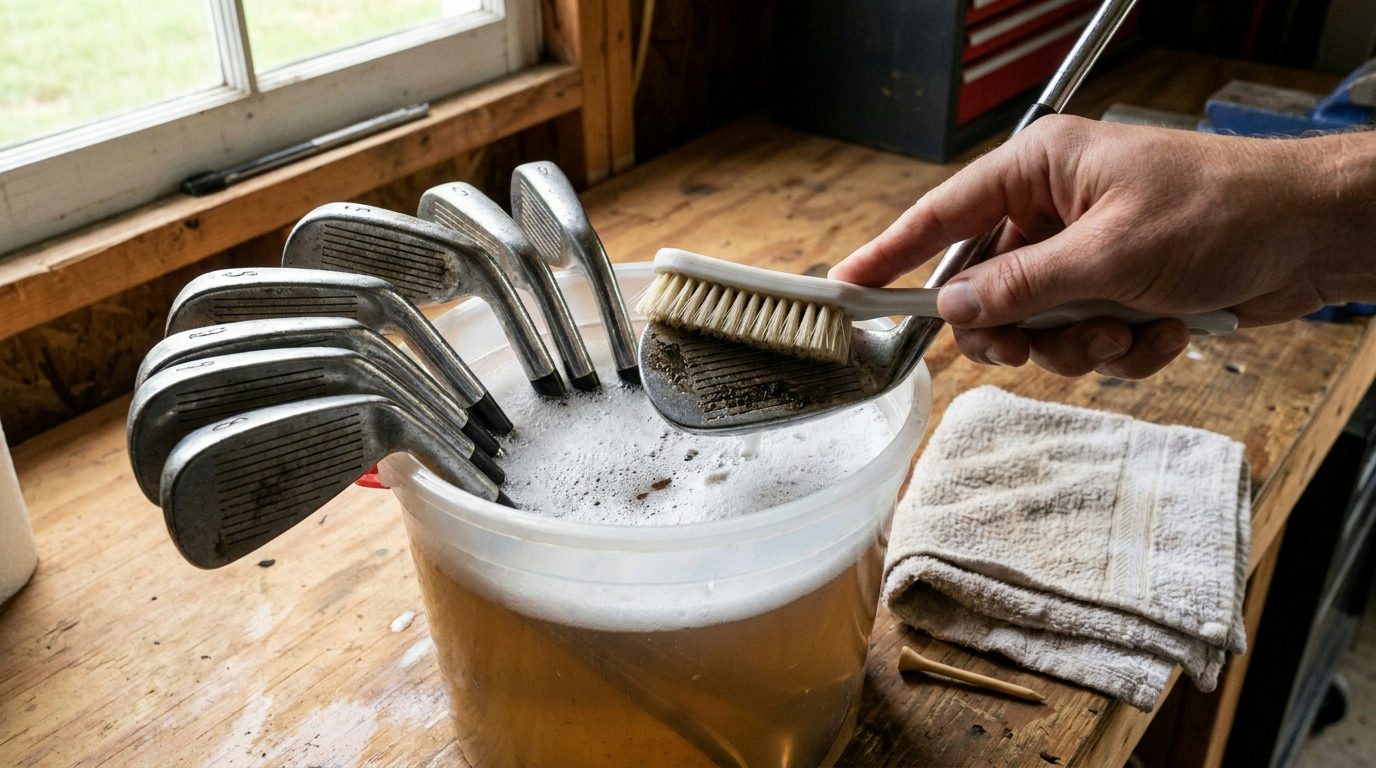
Learning how to clean golf clubs is one of the simplest ways to keep your equipment playing the way it should. Clean grooves help the face grip the ball, clean grips help your hands stay relaxed, and a quick routine after each round keeps small problems from building up. This guide walks you through each part of the set, step by step, with no special kit required.
Who this guide is for
This guide is for beginner and intermediate golfers who want a simple, repeatable cleaning routine. You might have just bought your first set, or you might have noticed muddy grooves and shiny, slippery grips. Either way, you only need a bucket, warm water, mild soap, a soft brush and a couple of towels. If your clubs came with care advice from the maker, keep it handy, because it always takes priority over general tips.
What you need before you start
Gather everything first so the job takes minutes rather than an afternoon.
- A bucket or large bowl of warm (not hot) water.
- A small squirt of mild washing-up liquid.
- A soft-bristled brush, such as an old toothbrush or a nylon club brush.
- A wooden or plastic tee for lifting dirt out of grooves.
- Two towels: one damp for wiping and one dry for finishing.
- Somewhere airy to let the clubs dry fully.
How to clean golf clubs: irons and wedges
Irons and wedges collect the most dirt, so they get the most attention. Work through them one at a time.
- Dip only the head. Stand the club in the bucket so the water covers the head but stays below the ferrule, the small collar where the head meets the shaft. Leave it for a short while to loosen dried mud.
- Brush the face and back. Use gentle strokes with the soft brush. Work along the grooves rather than across them.
- Clear the grooves gently. If dirt stays packed in, run the point of a tee along each groove. Avoid metal picks on wedges, because some finishes scratch easily.
- Rinse. Dip the head again or wipe it with the damp towel to remove soap.
- Dry straight away. Wipe the head, hosel and lower shaft with the dry towel. Wedges with raw or unplated faces can show surface rust, so drying them well matters most.
Repeat for every iron and wedge. Afterwards, look at each face under good light. If any groove still looks blocked, give it another pass with the tee.
Woods and hybrids: wipe, don’t soak
Drivers, fairway woods and hybrids need a lighter touch. Their heads are usually hollow and painted, and the bond between the head and shaft can suffer if water sits on it. So keep these heads out of the bucket.
- Dampen a soft cloth in your soapy water and wring it out well.
- Wipe the crown, face and sole in smooth strokes.
- Use the soft brush on the face grooves, which are often shallow.
- Wipe again with a clean, damp cloth, then dry thoroughly.
- Check the crown for sky marks or scuffs. A gentle wipe usually removes ball marks, while deeper scratches are cosmetic and best left alone.
Putters follow the same rule. Many putters have special finishes or inserts, so a damp cloth is usually all they need.
Grips: mild soap, rinse and dry
Grips gather sweat, sun cream and natural oils from your hands. Over time, that film makes them feel slick, and many golfers then squeeze harder without noticing. A wash can bring back much of the original feel.
- Dip a cloth or soft brush in warm soapy water.
- Scrub each grip all the way round, from the cap to the end of the rubber.
- Rinse with a clean, damp cloth so no soap is left behind.
- Pat dry with a towel, then stand the clubs grip-up to air dry fully before they go back in the bag.
Leather or wrap-style grips need extra care, so check the maker’s advice before you use water on them. If a grip still feels hard, shiny or cracked after cleaning, it may simply be worn. In that case, a local pro shop can advise on replacing it.
Shafts, ferrules and headcovers
Shafts rarely get dirty, but a quick wipe completes the job. Run a damp cloth down each shaft, then dry it. On steel shafts, look for small rust spots and wipe them away gently. On graphite shafts, look for chips or cracks in the paint. If you spot damage on any shaft, have a club fitter or pro shop look at it before you play again.
Headcovers can hold moisture against the heads. So, if they are damp after a round, take them off and let both the covers and the clubs dry separately.
A quick on-course routine with a towel
A deep clean at home is great, but a simple habit during the round does most of the work. Many coaches suggest hanging a towel on your bag with one half damp and the other half dry.
- After each shot from turf or sand, wipe the face with the damp half.
- Clear any packed grooves with a tee before your next shot with that club.
- Dry the face and grip with the dry half.
- Wipe your grips between holes, especially on warm or humid days.
- Carry a groove brush on your bag if you play muddy courses often.
This habit takes seconds, and it means each club is ready when you need it. In addition, a dry grip lets you hold the club with light, even pressure.
Storage and drying the bag
Where you keep your clubs matters as much as how you clean them. Moisture trapped in a closed bag can lead to rust on heads and mildew on grips.
- After a wet round, unzip every pocket and take out wet towels, gloves and waterproofs.
- Stand the bag upright in a dry, airy room with the hood off.
- Avoid leaving clubs in a car boot for long periods, since heat and cold can affect grips and the glue that holds heads in place.
- Store clubs indoors over winter if you can, and let them settle to room temperature before you play.
- Empty loose sand and grass from the bottom of the bag now and then.
What to avoid
When you think about how to clean golf clubs safely, remember that most damage comes from cleaning too hard rather than too little. Check the maker’s care advice for your clubs, but these general points apply to most sets.
| Avoid | Why | What to do instead |
|---|---|---|
| Harsh household chemicals or bleach | They can dull finishes and dry out grips | Use mild washing-up liquid and water |
| Wire brushes on soft or coated finishes | They can scratch plating, paint and black finishes | Use a nylon or toothbrush-style brush |
| Soaking woods, hybrids or putters | Water can reach the head-to-shaft bond | Wipe with a damp cloth and dry well |
| Hot water | It can soften grips and adhesives | Use warm water |
| Putting clubs away wet | Trapped moisture can cause rust and mildew | Dry each club and air the bag |
| Sharp metal tools in grooves | They can damage the face and groove edges | Use a tee or a plastic groove tool |
How to clean golf clubs on a simple schedule
This example is hypothetical and is only meant to show how the routine fits together. Imagine a golfer who plays once a week. During each round, they wipe the face after every shot with the towel. At home, they spend a few minutes wiping grips and drying the bag. Every few rounds, or after a muddy day, they do the full bucket clean for irons and wedges and a careful wipe for woods. Before the season starts, they check every grip and shaft for wear. This rhythm shows how to clean golf clubs without turning the job into a chore.
Quick troubleshooting checklist
- Grips still slippery after washing? They may be worn, so ask a pro shop about regripping.
- Orange spots on a wedge face? Light surface rust is common on some finishes. Dry the club well and check the maker’s advice.
- Rattle inside a wood? Stop using it and have a club repairer check it.
- Grooves still packed? Soak the iron head a little longer, then use a tee.
- Musty bag smell? Empty it fully and leave it open in a dry room.
For more simple guides for newer golfers, browse our Beginners’ Corner.
Where to read more: Golf.com on club-cleaning methods and Titleist’s Club Care 101.
Key takeaways
- Dip iron and wedge heads in warm soapy water, brush gently and dry them straight away.
- Wipe woods, hybrids and putters with a damp cloth instead of soaking them.
- Wash grips with mild soap, rinse and let them dry fully.
- Use a half-damp, half-dry towel on the course after each shot.
- Air the bag after wet rounds and store clubs somewhere dry.
- Skip harsh chemicals and wire brushes on soft finishes, and follow the maker’s care advice.
Once you know how to clean golf clubs properly, a few minutes of care after each round keeps your set feeling familiar and ready for the next tee time.
Written by the Golf Luxor Editorial desk. Disclosure: this guide contains no affiliate or sponsored links.