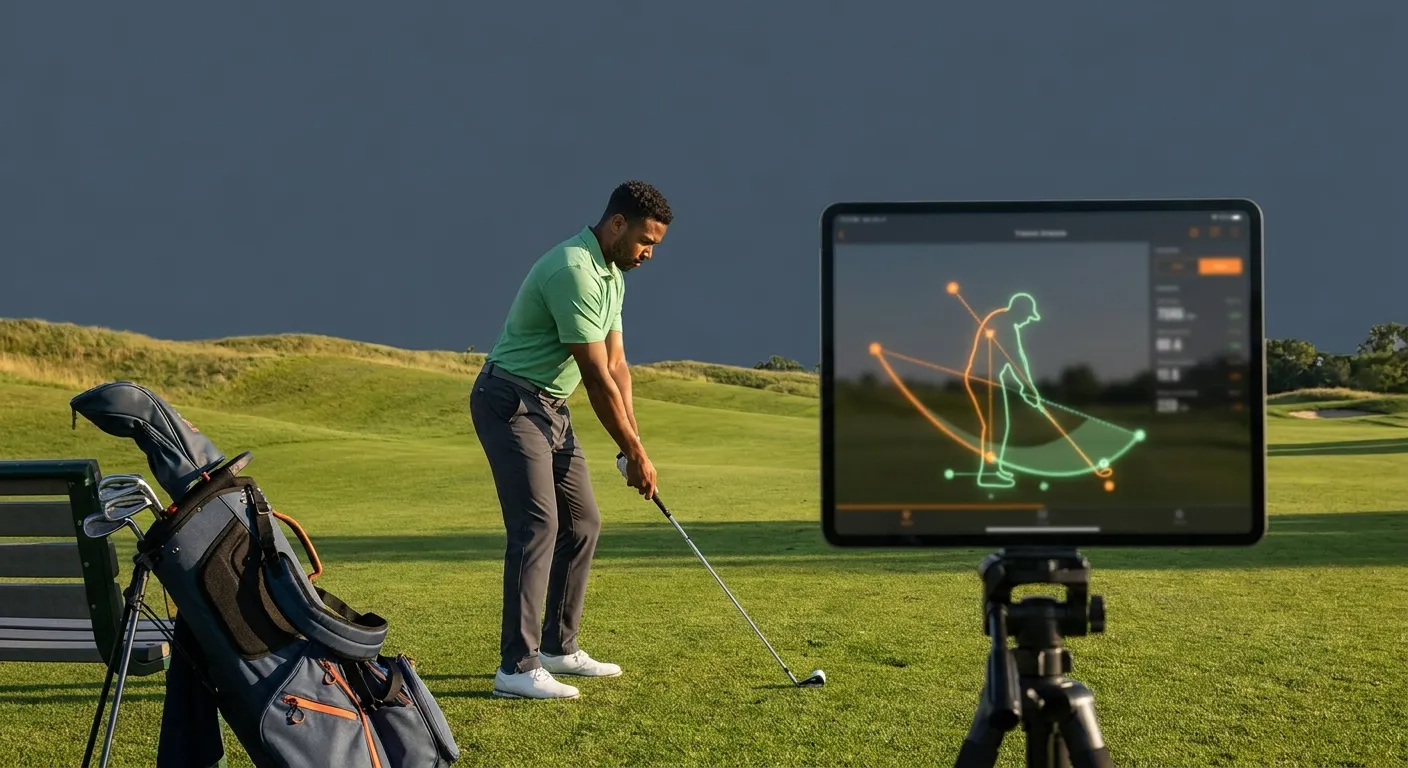
The golf media and education industry is in the midst of a dynamic transformation. Sustained participation growth and the burgeoning influence of digital content creators mean technology is reshaping how golfers learn and improve. One significant advancement is the integration of Artificial Intelligence (AI) into training tools. Understanding how AI golf swing analysis can benefit your practice is key to unlocking consistent improvement and making your learning journey more efficient and less intimidating.
How AI Golf Swing Analysis Works
AI-powered training tools are at the forefront of this technological revolution. These systems typically capture your swing via high-speed cameras or sensors. This often happens in a simulator or even with your smartphone. The AI then processes this data, analyzing swing mechanics with a precision impossible for the human eye alone. It identifies weaknesses – from subtle wrist angles at the top of the backswing to weight transfer issues through impact. Consequently, it generates automated improvement plans.
Imagine a personal coach who can instantly pinpoint flaws and suggest drills tailored specifically to your unique swing. This coach is available whenever and wherever you practice. This level of personalized, immediate feedback is transformative for beginner and intermediate golfers. They might not have constant access to a human instructor. It demystifies complex swing thoughts and provides clear, actionable steps for improvement.
Personalized Feedback Without the Premium Price Tag
Traditionally, a deep examination of swing mechanics required expensive lessons with a pro. These lessons were often limited by time and budget. While professional coaching remains invaluable, AI golf swing analysis offers an accessible alternative for regular, data-driven feedback. These tools can identify inconsistencies over multiple swings. They spot patterns that might go unnoticed in a single lesson.
The precision of AI in detecting subtle flaws means you get objective, unbiased insights into your swing. This objectivity helps you focus on specific areas for improvement. You no longer rely on guesswork or generic advice. For the 51% of Gen Z golfers citing mental health as a reason to play, the ability to practice effectively and see tangible progress through AI can significantly enhance the wellness aspect of the sport.
The Role of Remote Coaching in the AI Era
The rise of creator-led media and technological integration has also made remote coaching a standard practice. Students can upload swing videos captured from simulators or even outdoor practice sessions. Coaches then analyze these videos, often using AI-generated data as a foundation, to provide targeted feedback. This hybrid approach combines the best of both worlds: the analytical power of AI with the nuanced guidance of an experienced human coach.
This model is particularly beneficial for golfers who live in areas with limited access to qualified instructors. Furthermore, it allows for more flexible scheduling. Golfers can receive expert advice from anywhere, fostering a more connected and efficient learning environment. This approach supports continuous improvement. It bridges geographical gaps effectively.
Benefits of AI-Powered Swing Feedback
The advantages of using AI for golf swing feedback extend beyond just identifying flaws. Firstly, it offers unparalleled consistency. A human coach, however skilled, might have slight variations in their assessment from one day to the next. AI provides the same objective analysis every time. This consistency builds trust and allows golfers to track their progress more accurately.
Secondly, these systems can process vast amounts of data. They compare your swing to professional models and identify subtle deviations. This in-depth comparison helps pinpoint the root cause of issues, not just the symptoms. Therefore, you get a clearer understanding of what needs to change. This is crucial for lasting improvement.
Moreover, AI tools often come with extensive libraries of drills. Once a flaw is identified, the system can suggest specific exercises to correct it. This eliminates the guesswork from practice sessions. Instead, you receive a structured plan. This guided approach maximizes the effectiveness of your time on the range.
Enhanced Data Visualization
Modern AI golf swing analysis platforms excel at data visualization. They present complex metrics in easy-to-understand graphs and animations. You can see your swing path, club face angle, tempo, and more, all laid out clearly. This visual feedback is incredibly powerful for learning. It helps you connect the feeling of your swing with the actual mechanics. This connection accelerates the learning process. It makes abstract concepts tangible.
For example, some systems use 3D models of your swing. You can rotate these models, view them from different angles, and even overlay them with a perfect swing model. This level of detail was once reserved for elite athletes. Now, however, it is accessible to every golfer. This accessibility truly democratizes advanced training methods.
Choosing the Right AI Swing Analyzer
With a growing market of AI-powered golf tools, selecting the right one depends on your specific needs and budget. Some systems are integrated into golf launch monitors, offering comprehensive data including ball flight. Others are smartphone apps that use your phone’s camera. These vary greatly in price and features.
Consider what data points are most important to you. Do you need club path and face angle, or are you more focused on body movements? Furthermore, think about where you will primarily use the tool. An outdoor range might require different features than an indoor simulator. Reading reviews and comparing features is essential. This ensures you find a system that aligns with your goals.
For golfers seeking detailed insights into their equipment, combining an AI swing analyzer with a golf tracker and swing analyzer can provide a holistic view. This integration offers an even more comprehensive understanding of performance. It helps you optimize both your technique and your gear. This synergy is invaluable for serious improvement.
Integrating AI into Your Practice Routine
Incorporating AI golf swing analysis into your regular practice doesn’t have to be complicated. Start by dedicating a portion of your practice session to using the tool. Focus on one or two specific metrics that the AI identifies as problematic. For instance, if the analysis highlights an over-the-top swing path, dedicate time to drills designed to flatten your plane.
Regularity is key. Consistent feedback helps reinforce good habits and correct bad ones before they become ingrained. Moreover, don’t be afraid to experiment. Use the AI to test different swing thoughts or adjustments. See how they impact your numbers. This iterative process of feedback and adjustment is how real progress is made. It fosters a scientific approach to improvement.
Additionally, share your AI data with your human coach if you have one. This can provide your coach with valuable objective information. It allows them to tailor their advice even more precisely. This collaborative approach enhances the effectiveness of both AI and human instruction. It creates a powerful learning ecosystem.
Beyond the Swing: Holistic Improvement with Technology
While AI golf swing analysis focuses on mechanics, technology can support other aspects of your game too. For example, GPS units and golf rangefinders help with course management. They provide accurate distances. Understanding your distances is crucial for making smart decisions on the course. This complements your improved swing mechanics.
Furthermore, apps for mental game training and fitness trackers can contribute to a more holistic approach to golf. The modern golfer has access to an array of tools. These tools address every facet of performance. Embracing these technologies can lead to more balanced and sustainable improvement. It truly elevates your overall game.
The future of golf training is here. It is intelligent, personalized, and accessible. Embracing these advancements means you’re not just practicing; you’re practicing smarter. You’re building a foundation for consistent, enjoyable golf for years to come.
The integration of AI into golf training represents a significant leap forward. It offers a bridge between aspiration and achievement for golfers of all levels. This technology makes expert-level analysis available to everyone. It empowers individuals to take control of their improvement journey. Consequently, more golfers can experience the satisfaction of a well-struck shot and a consistently improving game. This makes the sport more enjoyable for all.
The Future of Golf Training with AI
The capabilities of AI in golf are continuously expanding. We can expect even more sophisticated systems in the coming years. These might include predictive analysis, suggesting potential issues before they fully develop. They could also offer more immersive training experiences through virtual reality. The goal remains the same: to make golf improvement more intuitive and effective.
Imagine AI not just analyzing your swing, but also understanding your body’s unique biomechanics. It could then recommend personalized fitness routines to support your golf game. This level of integration would transform how golfers approach physical preparation. It would create a truly customized training regimen. This holistic approach promises even greater gains.
The accessibility of these tools will also likely increase. As technology becomes more widespread, costs tend to decrease. This means even more golfers will be able to benefit from advanced analysis. The democratization of high-tech training will continue. Ultimately, this will raise the overall standard of play across all amateur levels. The impact will be profound.
In conclusion, AI golf swing analysis is not just a passing trend. It is a fundamental shift in how golfers can learn and improve. By providing objective data, personalized feedback, and actionable insights, these tools empower golfers. They help golfers practice more efficiently and effectively. Embrace this technology. See your golf game reach new heights. Learn more about AI in golf from Golf Digest. Also, explore how AI is shaping the broader golf landscape with the USGA.
Frequently Asked Questions About AI in Golf Training
What exactly does artificial intelligence do for my golf swing?
AI in golf swing analysis precisely measures and evaluates various aspects of your swing. It captures data from cameras or sensors. Then, it compares your movements to ideal models. It identifies specific areas for improvement, such as tempo, club path, or body rotation.
Can AI swing feedback replace a human golf coach?
No, AI swing analysis complements a human coach, but does not fully replace one. It provides objective data and instant feedback. However, a human coach offers nuanced advice, personalized drills, and psychological support. The best approach often combines both for optimal results.
Is this technology only for professional golfers?
Absolutely not. While professionals use advanced technology, AI-powered swing analysis is increasingly accessible to all skill levels. Many affordable apps and devices exist. These tools help beginners and intermediate players understand and improve their mechanics effectively.
What kind of equipment do I need for AI-driven swing improvement?
The equipment varies. Some systems require dedicated launch monitors or high-speed cameras. Others can use just your smartphone camera and a specialized app. Research different options to find one that fits your budget and practice environment. Consider a golf club that matches your swing profile for best results.
How quickly can I expect to see results from using AI for my golf swing?
Results vary depending on your dedication and the specific issues you’re addressing. Consistent use of AI feedback, combined with focused practice, can lead to noticeable improvements in weeks or months. It offers a structured path to progress.