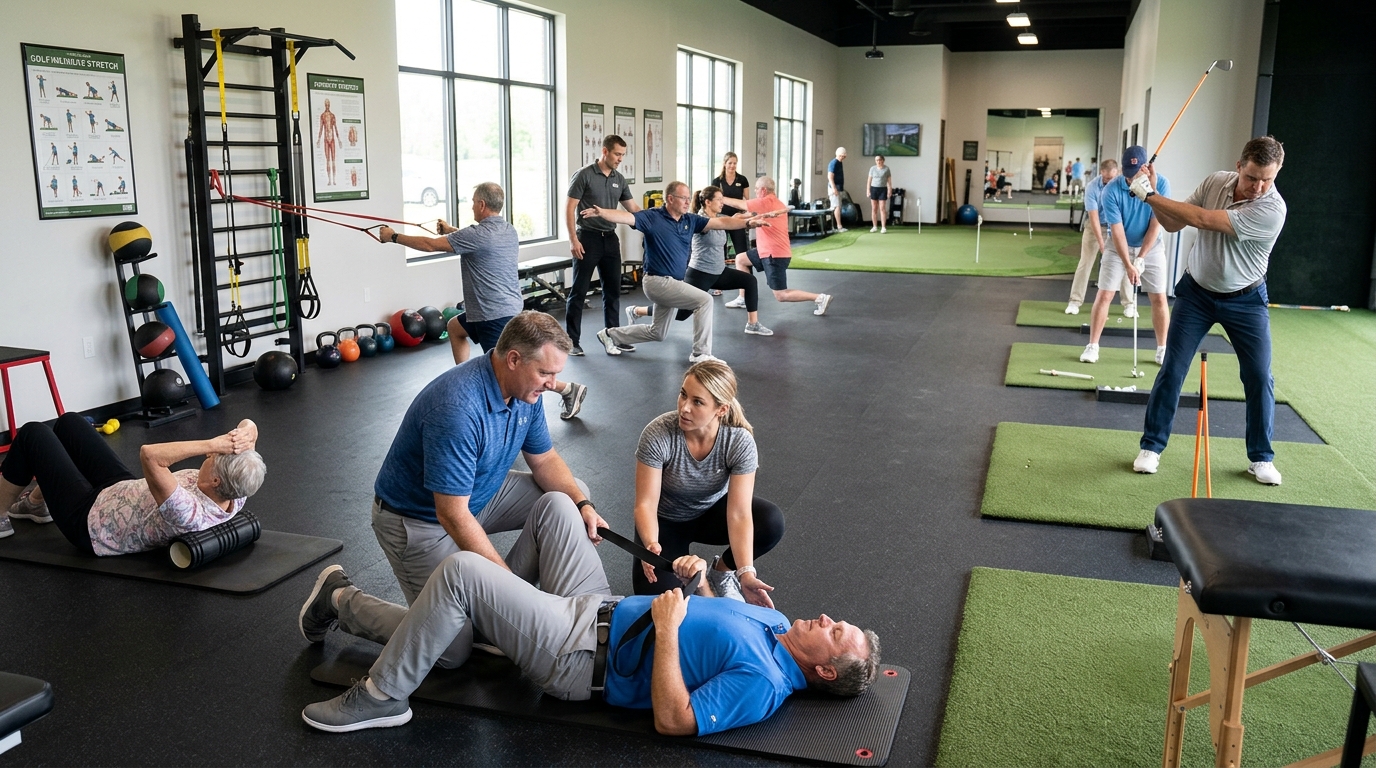
Many golfers struggle with stiffness, restricted movement, and inconsistent swings, yet they often overlook one key factor: mobility. While technique plays a role, your body must be able to move freely to execute it properly. This is where golf fitness routines flexibility become essential, helping you unlock better rotation, smoother swings, and more consistent performance.
At first, players may try to compensate for limited flexibility by forcing their swing. However, this approach usually creates tension and inconsistency. Instead, improving movement through golf fitness routines flexibility allows the body to function naturally. As a result, swings feel more fluid, and power becomes easier to generate.
Over time, these routines not only enhance performance but also improve overall comfort on the course. Rather than fighting against your body, you begin to work with it, creating a more enjoyable and sustainable golfing experience.
Why Flexibility Is Critical for Golf Performance
Golf may not appear physically demanding, yet it requires a high level of coordination and mobility. Without proper flexibility, even simple movements can become difficult. Golf fitness routines flexibility address this issue by improving how your body moves during the swing.
When your muscles and joints move freely, you can rotate more effectively. This allows for a fuller backswing and a smoother transition into the downswing. As a result, you generate more power without increasing effort.
Additionally, flexibility improves balance. A stable and controlled swing leads to better contact and more predictable results. Without it, compensations often lead to inconsistent shots. By focusing on mobility, you create a strong foundation for improvement.
Common Signs of Limited Flexibility in Golfers
Many golfers do not realize that flexibility is holding them back. However, certain signs often indicate restricted movement. Golf fitness routines flexibility can help address these issues and restore proper function.
If your backswing feels short or restricted, it may be due to tight shoulders or hips. Similarly, difficulty maintaining balance during the swing often points to limited mobility. Another common sign is inconsistency, where shots vary despite similar effort.
Additionally, discomfort or stiffness after playing can indicate a lack of flexibility. By identifying these signs early, players can take steps to improve their movement and performance.
How Fitness Routines Improve Mobility and Control
Fitness routines designed for golf focus on both flexibility and strength. Golf fitness routines flexibility improve how your muscles and joints work together, creating more efficient movement patterns.
Stretching helps increase range of motion, while strengthening exercises support stability. Together, these elements create a balanced approach to improvement. As your body becomes more capable, your swing becomes more consistent.
Moreover, improved mobility enhances coordination. When your body moves smoothly, timing becomes easier. This leads to better contact and more reliable results. Over time, these improvements translate into lower scores and greater confidence.
Key Exercises to Improve Flexibility for Golf
To see real progress, it is important to focus on exercises that target the key areas of the golf swing. Golf fitness routines flexibility should include movements that improve mobility in the hips, shoulders, and spine.
- Hip mobility drills help increase rotation, allowing for a deeper and more stable turn.
- Thoracic spine rotations improve upper body movement, making the swing smoother and more complete.
- Shoulder stretches enhance range of motion, helping maintain width and control.
- Dynamic warm-up exercises prepare the body for movement, reducing stiffness and improving performance.
By incorporating these exercises regularly, players build a strong foundation for better movement. Even short sessions can lead to noticeable improvements.
When to Perform Flexibility Training
Consistency is key when it comes to improving mobility. Golf fitness routines flexibility should be integrated into your daily schedule rather than treated as an occasional activity.
Before playing, focus on dynamic movements that warm up the muscles. These exercises prepare your body for the demands of the swing. After your round, static stretching helps maintain flexibility and reduce soreness.
Additionally, training on non-golf days supports long-term improvement. By making flexibility part of your routine, you ensure that progress continues over time.
Connecting Flexibility to Effortless Power
Many golfers believe that power comes from strength alone. However, flexibility plays an equally important role. Golf fitness routines flexibility help create the conditions needed for efficient energy transfer.
When your body can rotate fully, it stores more energy during the backswing. This energy is then released during the downswing, creating speed without extra effort. As a result, your swing feels smoother and more controlled.
Furthermore, flexibility improves rhythm. A relaxed body supports a consistent tempo, which is essential for generating power. When everything works together, distance becomes a natural outcome.
Reducing Injury Risk Through Better Movement
Golf involves repetitive motion, which can place stress on the body over time. Without proper flexibility, this stress can lead to discomfort or injury. Golf fitness routines flexibility help reduce this risk by improving movement quality.
Flexible muscles and joints move more efficiently, which reduces strain. This is especially important for areas like the lower back and shoulders, which are heavily involved in the swing.
Additionally, improved mobility supports proper technique. When your body moves correctly, you are less likely to develop harmful habits. This protects both your performance and your health.
Building a Sustainable Fitness Routine
Improving flexibility is not a one-time effort. It requires consistency and patience. Golf fitness routines flexibility should be approached as a long-term commitment rather than a quick fix.
Start with simple exercises and gradually increase intensity. Focus on quality rather than quantity, ensuring that each movement is controlled and effective. This approach leads to steady progress.
Moreover, listen to your body. Avoid pushing too hard, as this can cause injury. Instead, aim for gradual improvement that supports both performance and comfort.
Translating Fitness Gains Into Better Golf Performance
The ultimate goal of any fitness routine is to improve your performance on the course. Golf fitness routines flexibility create a foundation for better movement, which leads to more consistent results.
As your mobility improves, your swing becomes more repeatable. This reduces errors and increases confidence. Players begin to trust their movement and focus more on strategy.
Additionally, improved flexibility allows for better adaptation. Golf conditions change, and your ability to adjust is crucial. A mobile body responds more effectively, helping you perform in a variety of situations.
Conclusion: Unlocking Your Potential Through Better Movement
Improving your golf game does not always require more practice. Sometimes, the biggest gains come from improving how your body moves. Golf fitness routines flexibility provide a simple yet powerful way to enhance performance and enjoyment.
By focusing on mobility, you create a swing that feels natural and efficient. Over time, this leads to better distance, improved consistency, and greater confidence. More importantly, it allows you to play the game comfortably and sustainably.
In the end, the key to improvement lies in consistency. With regular practice and a commitment to better movement, you can unlock your full potential and enjoy golf at a higher level.
FAQ
1. How often should I do golf fitness routines?
Ideally, you should perform them several times a week to maintain and improve mobility.
2. Can flexibility training really improve my swing?
Yes, better mobility allows for a fuller turn and more efficient movement, which improves performance.
3. Are these routines suitable for beginners?
Absolutely, players at all levels can benefit from improved flexibility and movement.
4. How long does it take to see results?
Some improvements can be felt quickly, but consistent practice leads to lasting changes.
5. Do I need equipment for these exercises?
Most routines can be done using bodyweight movements, making them easy to perform anywhere.